


Oops. You just picked up your vehicle after a windshield replacement or a minor fender bender. The paint looks perfect, the glass is crystal clear, and the car drives straight. You might think the job is finished. Take a moment. Is your safety tech actually working?
Modern vehicles are essentially computers on wheels. Features like Lane Departure Warning, Adaptive Cruise Control, and Automatic Emergency Braking rely on a complex network of cameras and sensors. If these systems are even slightly misaligned, they become a liability rather than a safety feature. This is why an ADAS (Advanced Driver Assistance Systems) Calibration Certificate is not just another piece of paper: it is your only proof that your vehicle is safe to drive.
At Smart Vehicle Solutions, we prioritize your safety by providing comprehensive documentation for every calibration we perform. Whether you are a vehicle owner or a collision center, understanding the value of this certificate is essential for your protection.
What Exactly Is an ADAS Calibration Certificate?
A calibration certificate is a detailed technical report generated after a professional calibration service. It serves as a digital and physical “receipt” of safety. This document verifies that a certified technician has used specialized equipment to align your vehicle’s sensors back to the manufacturer’s original equipment manufacturer (OEM) specifications.
A standard report from Smart Vehicle Solutions includes:
- Pre-Scan Data: A diagnostic snapshot of your vehicle’s electronic health before any work begins.
- Calibration Results: Specific data points showing that cameras and radars are precisely aimed.
- Post-Scan Data: Verification that all error codes have been cleared and the system is fully operational.
- Technician Credentials: Confirmation that the work was performed by a trained professional.
- Vehicle Information: Your VIN, make, and model to ensure the record is tied directly to your car.

The Math of Safety: Why One Degree Matters
Precision is the foundation of ADAS technology. Some drivers assume that if there is no warning light on the dashboard, everything is fine. This is a dangerous misconception. Many ADAS sensors are “blind” to their own misalignment.
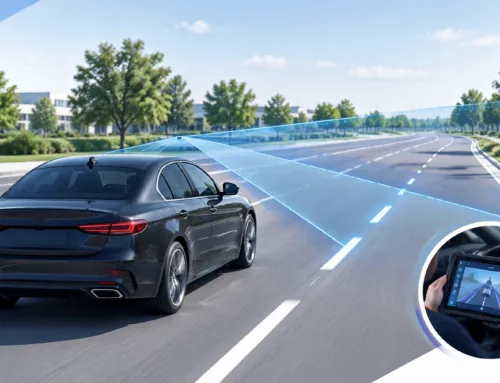
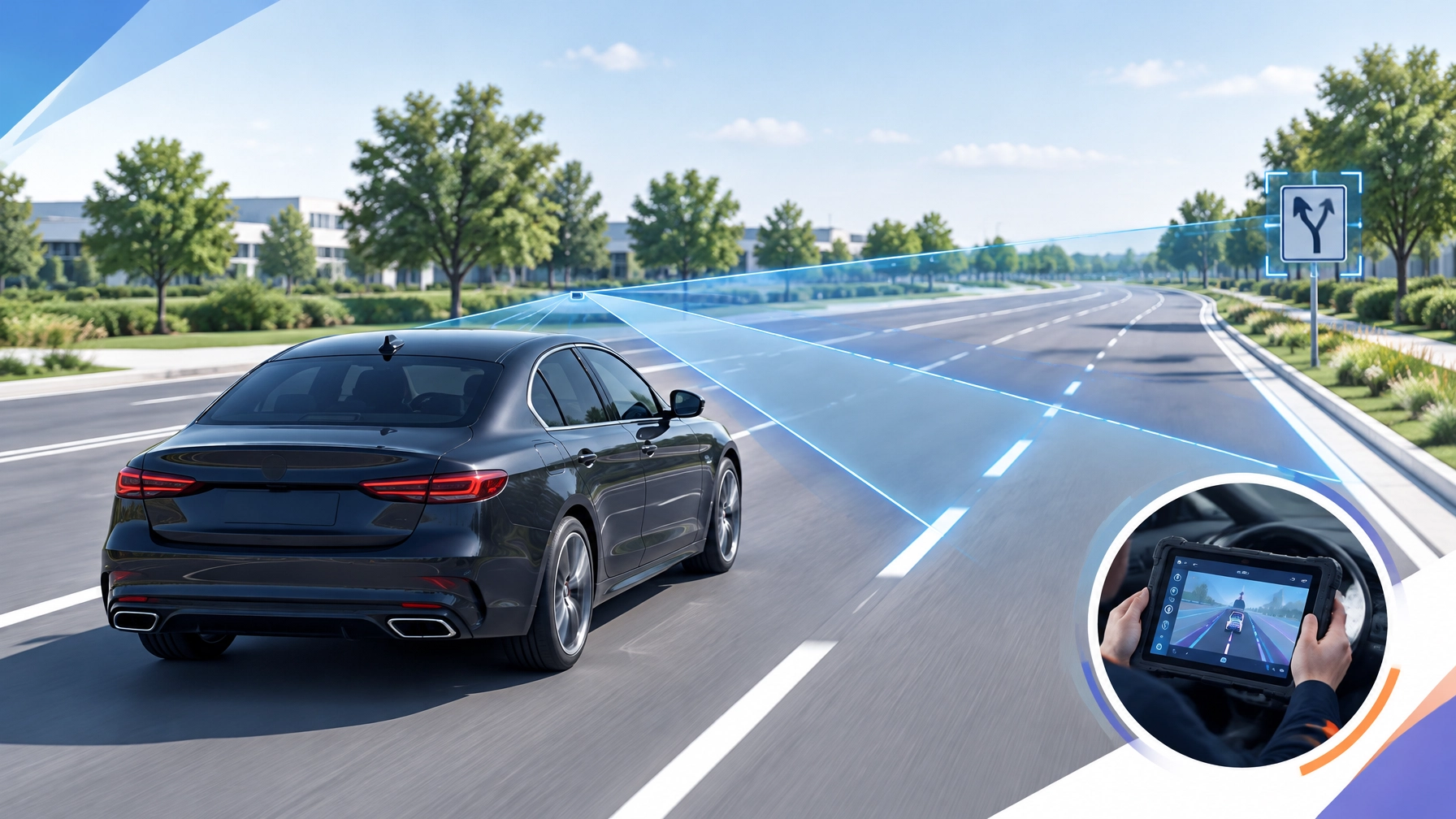
Consider the camera mounted behind your rearview mirror. If that camera is misaligned by just one single degree, its field of view could be off by as much as 8 feet at a distance of 100 feet. At highway speeds, that 8-foot error is the difference between your Automatic Emergency Braking stopping you safely or failing to recognize an obstacle entirely.
The calibration certificate provides the mathematical proof that your sensors are seeing the road exactly as they should. Without it, you are simply guessing.
Why Your Insurance Company Demands This Paper
If you are involved in an insurance claim, documentation is your best friend. Insurance carriers are increasingly strict about ADAS requirements. Because these systems are critical to preventing accidents, many insurers now mandate a documented calibration service before they will close a claim or reimburse for repairs.
Without a certificate, you may face:
- Denied Claims: If you have a second accident and your ADAS failed because it wasn’t documented as calibrated, the insurer might deny coverage.
- Delayed Reimbursement: Repair shops and owners often face delays in payment until “proof of calibration” is uploaded to the claim file.
- Liability Disputes: If a vehicle is returned to a customer without proper documentation and an accident occurs, the legal consequences can be catastrophic for both the shop and the owner.
By choosing Smart Vehicle Solutions, you receive industry-standard documentation that satisfies insurance requirements and speeds up the claims process.
Protection Against Legal Liability
For automotive repair shops and collision centers, the calibration certificate is a vital shield against liability. We live in a world where “duty of care” is a legal standard. If a shop replaces a bumper: which often houses radar sensors: and fails to document the recalibration of those sensors, they are legally vulnerable.
Standard customer waivers are often insufficient in court. A technician cannot claim they didn’t know a calibration was required when OEM guidelines explicitly state it is necessary. Our detailed records provide the evidence needed to prove that the shop met the highest safety standards and followed all manufacturer protocols.
Resale Value and Vehicle History
When it comes time to sell your vehicle, a folder full of service records adds significant value. Buyers are becoming more tech-savvy. They want to know that the advanced safety features they are paying for actually work.
A “clean” vehicle history report is great, but a detailed ADAS calibration history is better. It shows a level of expert care and attention to detail that sets your vehicle apart. It proves that even after a repair, the car was restored to its factory-safe condition.
The Smart Vehicle Solutions Difference
We understand that getting your car back on the road is a priority. That is why we have designed our services to be as efficient as they are thorough. We don’t just clear codes; we provide a complete safety solution.
Our USPs include:
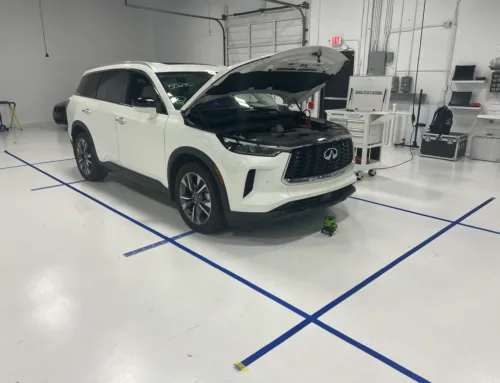
- Mobile Service Options: We bring the calibration lab to you. Whether you are at home or at a repair shop, we provide on-site expertise.
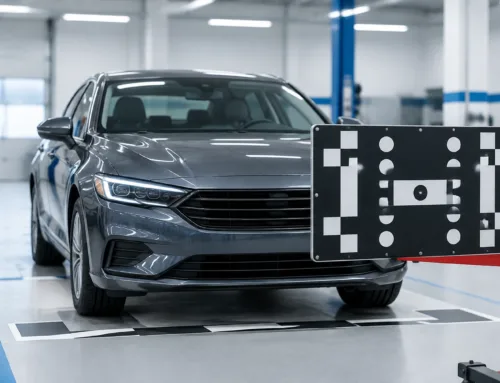
- Latest Technology: We use specialized calibration equipment that interfaces directly with your vehicle’s computer.
- Certified Technicians: Our team is highly trained in the nuances of modern vehicle geometry and sensor alignment.
- Post-Calibration Road Test: We don’t just rely on the computer. Every vehicle is road-tested to ensure real-world performance.
- Comprehensive Documentation: You receive a digital or physical copy of your certificate immediately upon completion.
When Should You Ask for a Certificate?
Not every repair requires a calibration, but many common ones do. You should always insist on a calibration and a certificate if your vehicle has undergone:
- Windshield Replacement: Most cameras are mounted directly to the glass.
- Bumper Repair or Replacement: Radar sensors are often located behind or within the bumper covers.
- Wheel Alignment or Suspension Work: ADAS systems rely on the vehicle’s “thrust angle.” If the wheels change, the sensors must be updated.
- Side Mirror Replacement: Many “bird’s eye view” camera systems are housed in the mirrors.
- Collision Repair: Even minor “tap” can jar a sensor out of its precise alignment.
Expert Care Is Just a Call Away
Don’t leave your safety to chance. If your vehicle has recently been in the shop, or if you are a repair professional looking for a reliable partner, Smart Vehicle Solutions is here to help. We provide the expertise, the technology, and: most importantly: the proof that your vehicle is safe.
Our team is dedicated to precision. We ensure that every sensor, camera, and module is functioning exactly as the manufacturer intended. When we finish a job, you leave with more than just a working car; you leave with the peace of mind that comes from documented safety.
Call us today. Let us handle the technical details so you can focus on the drive. For more information about our diagnostic scanning, clear codes, and calibration services, visit our services page or contact us to schedule your mobile calibration.

Smart Vehicle Solutions
Expert Care. Documented Safety. Mobile Convenience.
Learn more about our team




Leave A Comment
You must be logged in to post a comment.