

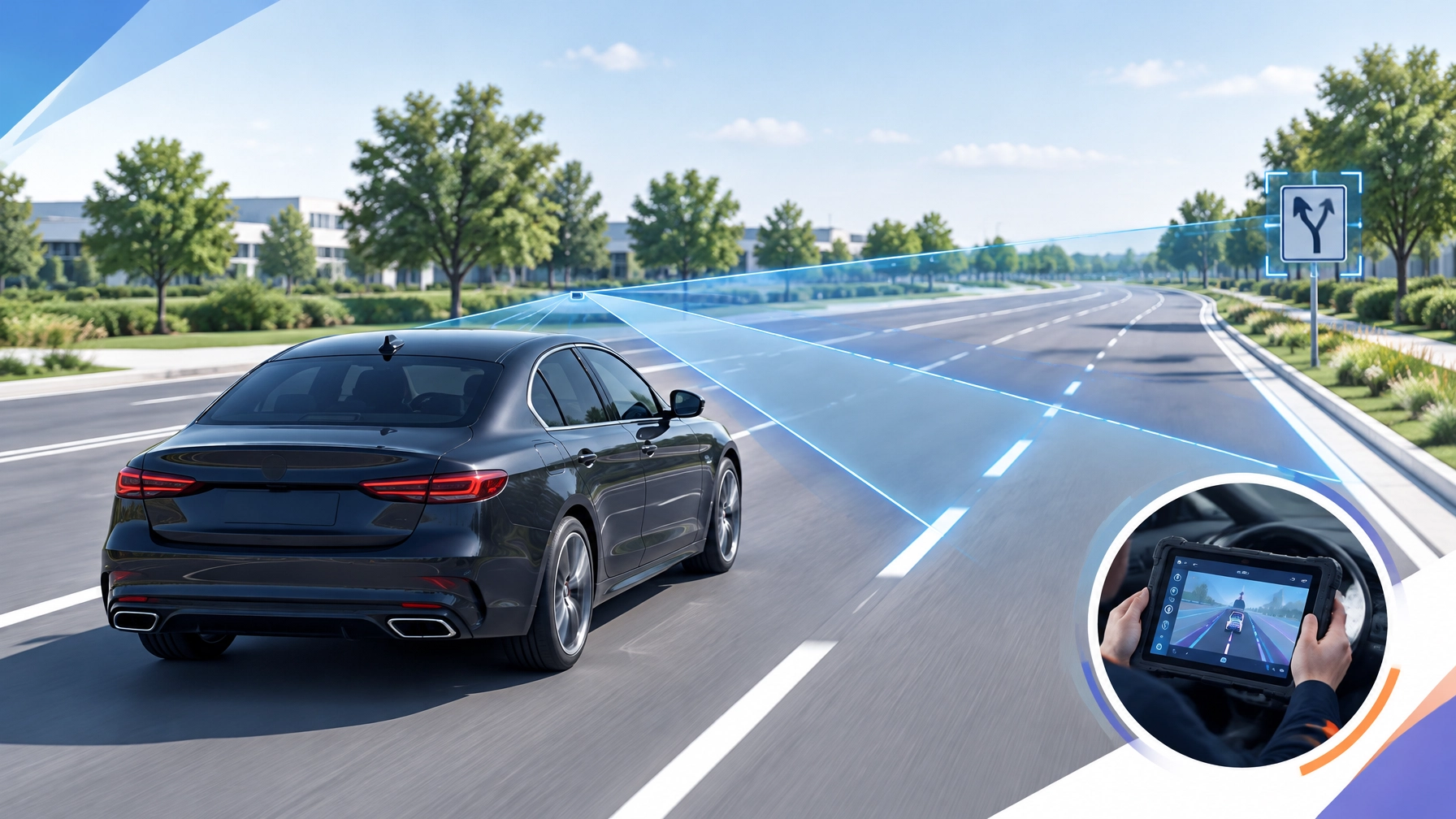
If your vehicle needs ADAS calibration after a repair, you may hear two terms: static calibration and dynamic ADAS calibration. They describe different procedures. One uses carefully positioned targets while the vehicle is stationary. The other uses a controlled service drive so the vehicle’s system can observe real-world road features.
Some vehicles require one method. Some require the other. Some require both. The correct procedure depends on your vehicle’s manufacturer instructions, the sensor or system being calibrated, and the repair that was performed.
Do not choose a procedure based on convenience or assume that a test drive completes calibration. Check the current instructions for your vehicle’s year, make, model, and equipment.
What is static ADAS calibration?
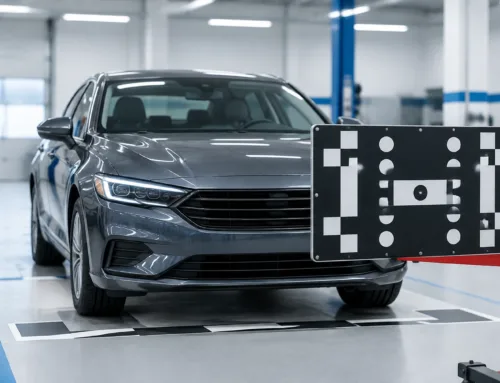
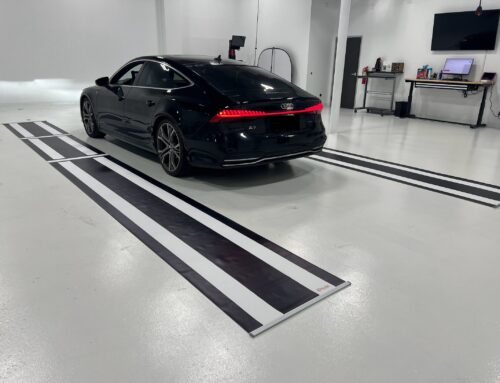
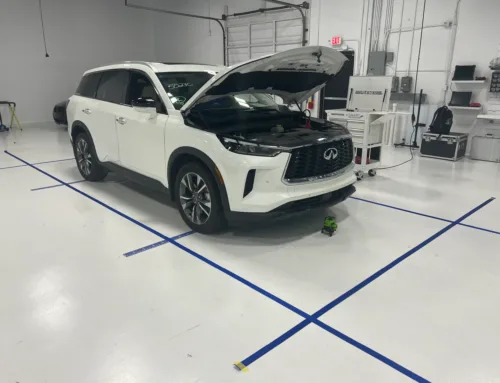
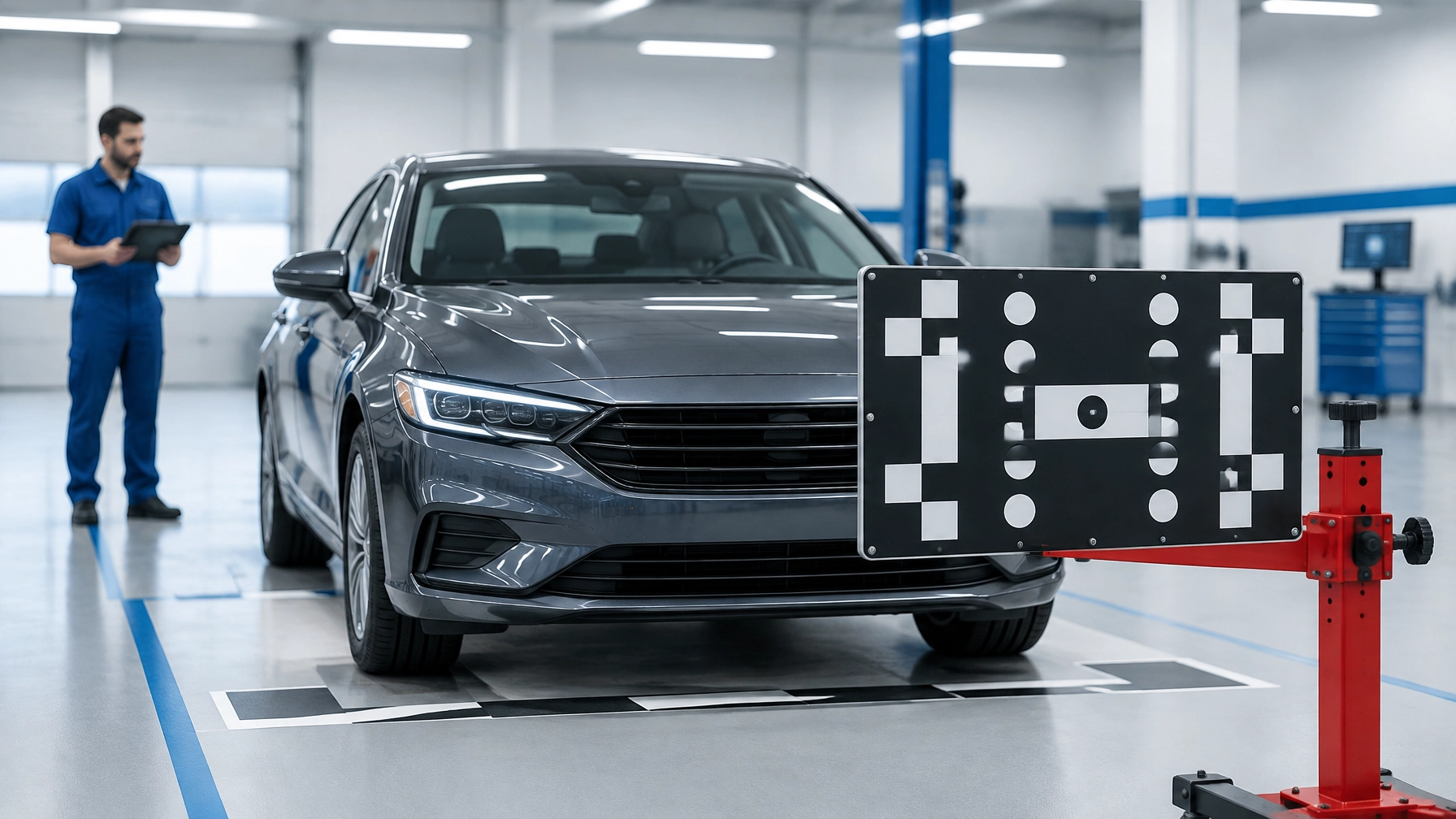
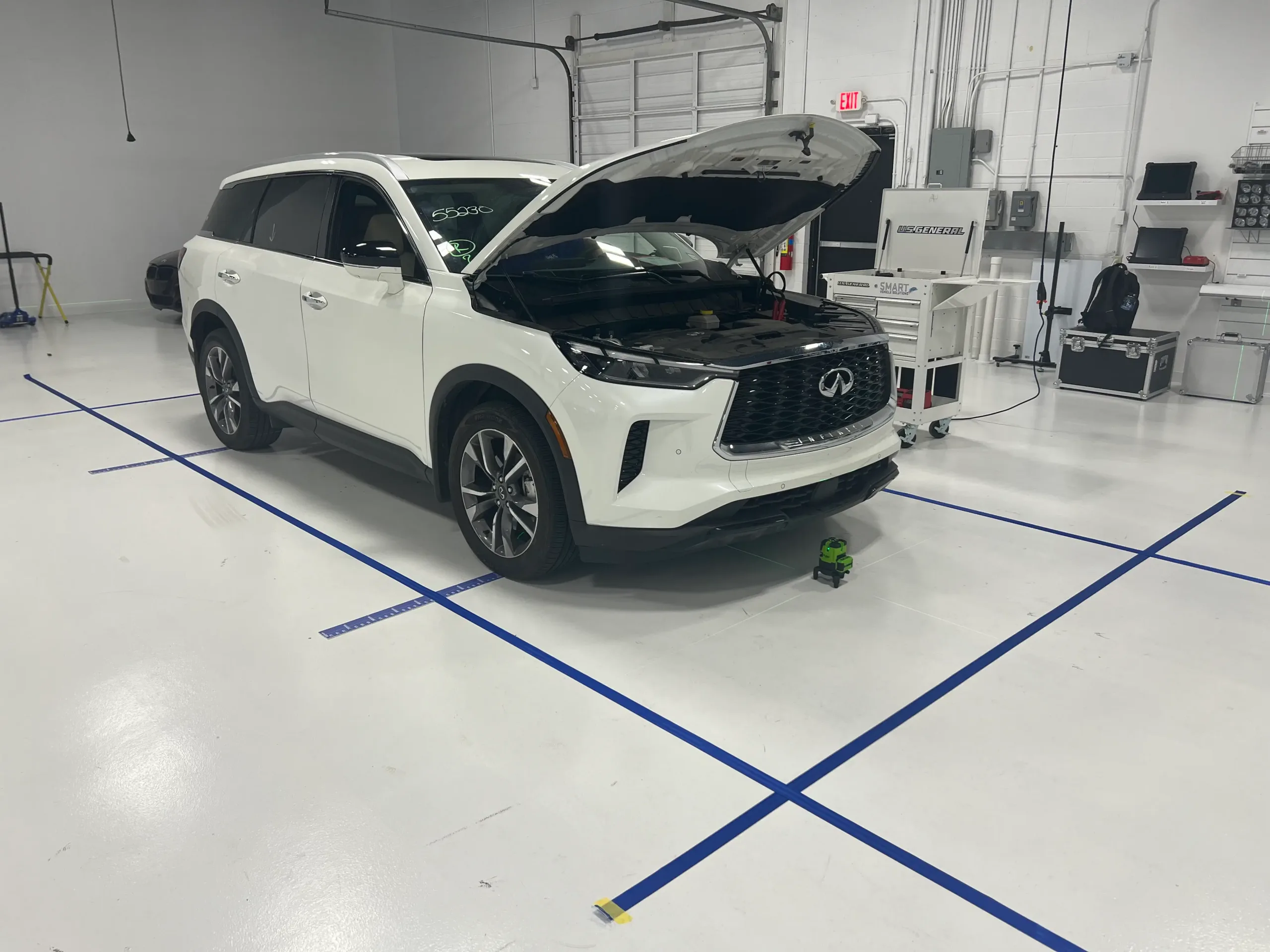
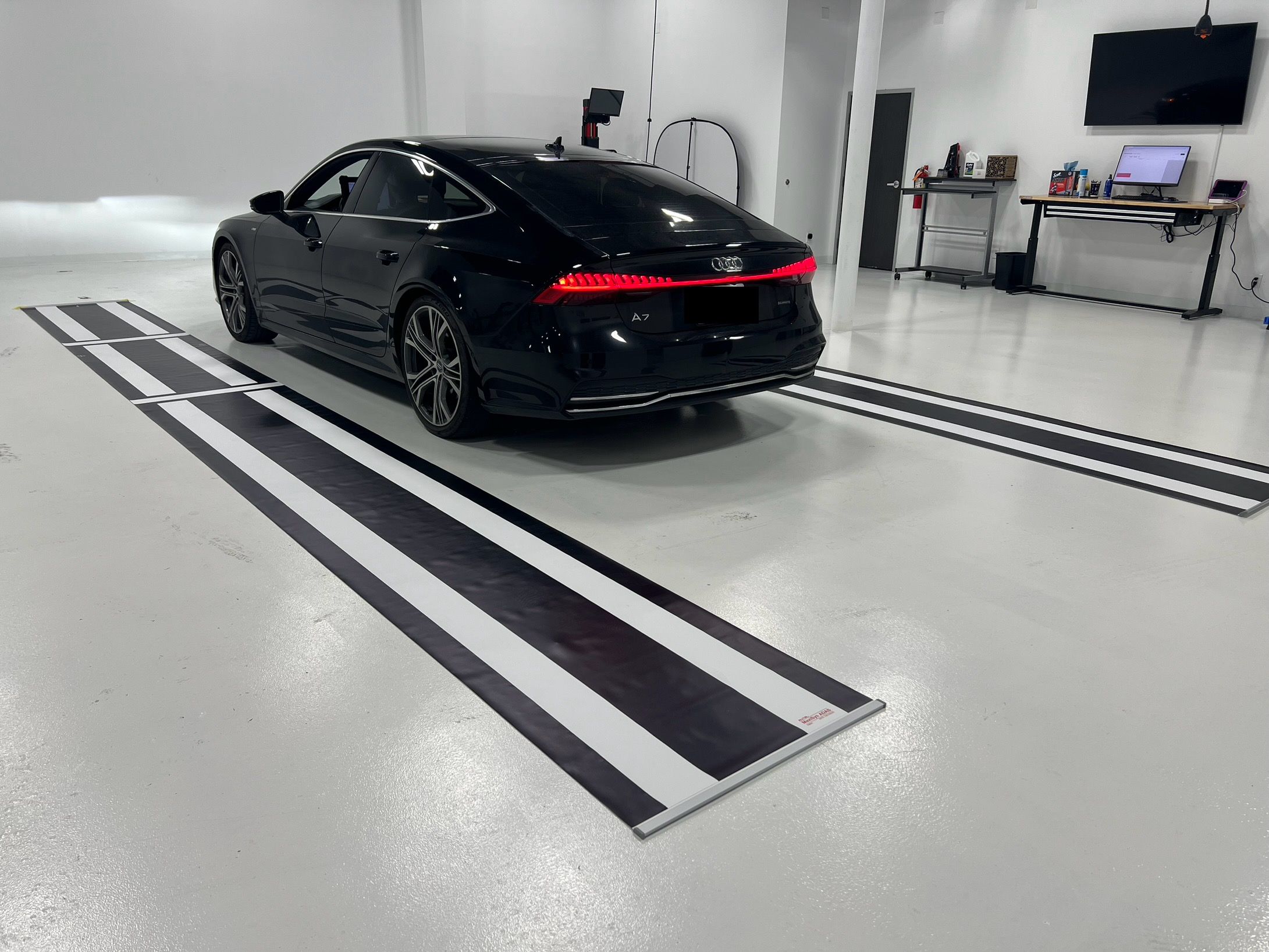
Static calibration is performed with the vehicle stationary. A technician positions a target, board, reflector, or other specified equipment in relation to the vehicle. A diagnostic tool communicates with the vehicle and guides the calibration process.
The setup must be precise. Depending on the procedure, the technician may need to verify the vehicle’s centerline, sensor height, target distance, wheel alignment, and steering position. The floor may need to be level. The bay may need suitable lighting and enough clear space around the vehicle.

Static procedures can be used for cameras, radar, and other sensors. The target and setup differ by vehicle and system. A target for one model is not automatically suitable for another.
What is dynamic ADAS calibration?
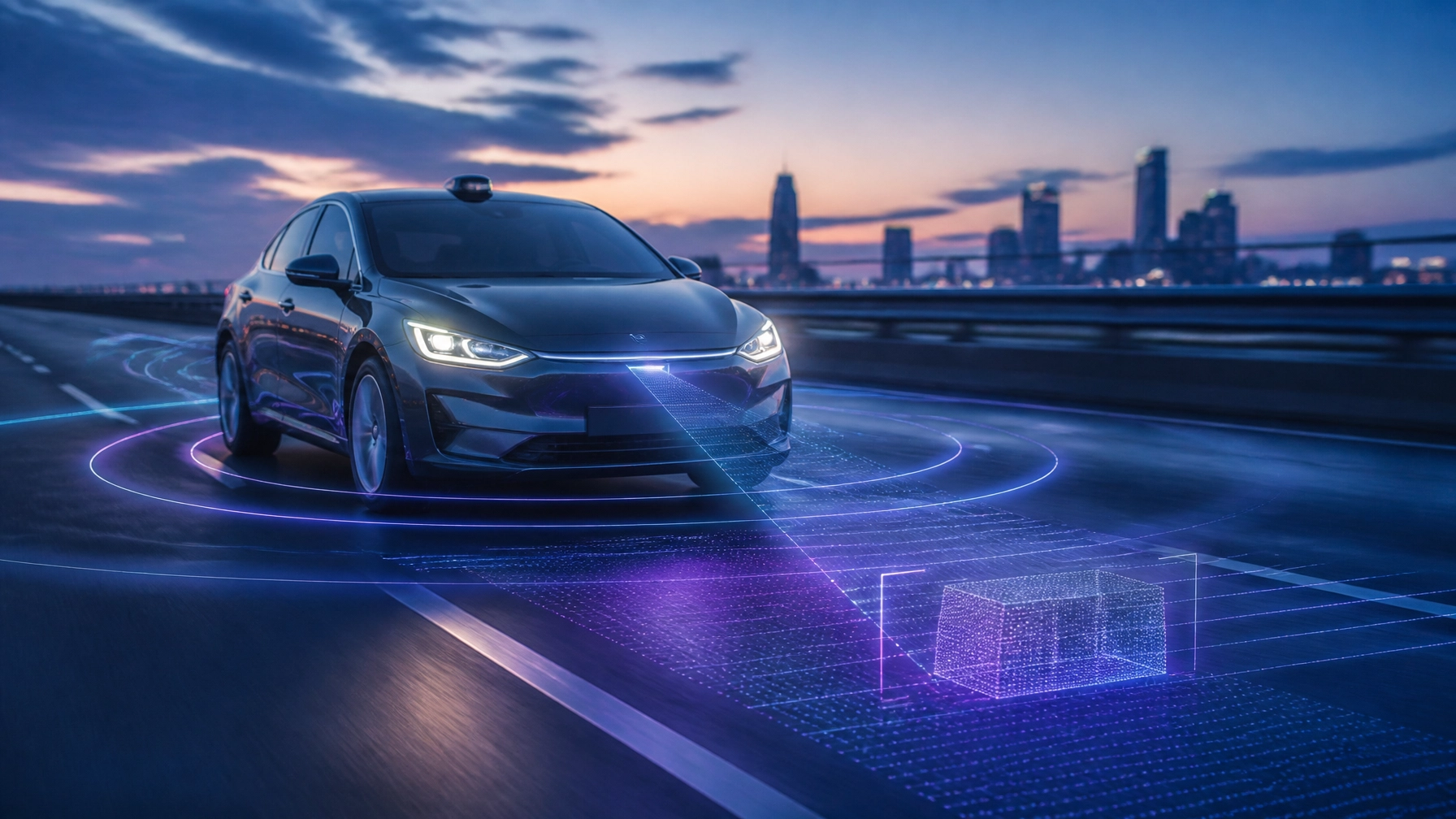
Dynamic ADAS calibration is performed while the vehicle is driven under conditions specified by the manufacturer. A technician typically uses a diagnostic tool to start or monitor the calibration. During the drive, the vehicle’s system observes features such as lane markings, signs, or other road users to complete its learning or calibration process.
The service drive is not simply a casual test drive. The required route, speed, duration, weather, visibility, traffic, and road features can all matter. For example, a system may need clearly visible lane markings or a certain range of speeds. If the route does not meet the required conditions, calibration may not complete.
That is why dynamic calibration should be planned and verified, not treated as an informal drive around the block.
Static vs. dynamic calibration at a glance
| Static calibration | Dynamic calibration |
|---|---|
| Vehicle is stationary | Vehicle is driven |
| Uses specified targets, reflectors, or boards | Uses specified real-world road features |
| Requires precise vehicle and target positioning | Requires a suitable route and driving conditions |
| Often performed in a controlled service area | Performed on a road or other suitable driving route |
| Procedure depends on the sensor and vehicle | Procedure depends on the sensor, vehicle, and road conditions |
Both methods require the correct diagnostic equipment and vehicle preparation. Neither should be selected by guesswork.
Which calibration does your car actually need?
The manufacturer’s procedure determines the answer. It can vary by vehicle model, system, sensor, and repair. A windshield replacement, collision repair, wheel alignment, suspension work, or sensor replacement may trigger a calibration requirement. The required method may differ even between vehicles with similar features.
Depending on the specific procedure, the vehicle may need:
- Static calibration only
- Dynamic calibration only
- Static calibration followed by dynamic calibration
- Another specified sequence
Some systems use the target-based procedure to establish a precise sensor reference, then require a drive to finish learning or validation. Other procedures may specify one method rather than both. Do not assume every vehicle needs both, or that either method can replace the other.
For repair professionals, use current vehicle-specific OEM service information to confirm the calibration trigger, sequence, setup, and verification requirements. I-CAR’s OEM Calibration Requirements Search is a useful starting point for locating manufacturer information. Always follow the applicable OEM procedure for the vehicle being repaired.
Why a shop must be able to complete the required method
A shop that offers only static calibration may not be able to complete a vehicle that requires dynamic calibration. The same applies in reverse. A road drive does not replace a required target-based setup, and a target board does not automatically complete a required service drive.
Ask the repair provider:
- Which calibration procedure does the manufacturer specify?
- Does this vehicle need static calibration, dynamic calibration, or both?
- Will the calibration be performed in the required conditions?
- Will I receive documentation of the completed work?
Many general mechanical shops do not inform customers that recalibration may be needed after a repair because they lack the equipment, space, training, or capability to offer the service themselves. This can leave an important step off the repair plan. Ask directly, especially after windshield, suspension, alignment, steering, or collision work.
For more about recalibration after a windshield replacement, read our guide to windshield camera calibration after a glass swap. If your vehicle recently had an alignment, see our article on ADAS calibration after a wheel alignment.
Common calibration myths to clear up
Myth: Dynamic calibration is just a test drive
Fact: It is a manufacturer-directed procedure with required conditions and a diagnostic sequence. A standard post-repair road test may not activate or complete the calibration.
Myth: If the dashboard has no warning light, the camera is aligned
Fact: A misaligned camera may not trigger a dashboard warning light. The vehicle may have no obvious warning while the camera’s view or reference is still inaccurate. Do not use the absence of a warning light as proof that calibration is unnecessary.
Myth: Every vehicle needs both methods
Fact: Some vehicles require both, while others specify static only or dynamic only. Follow the vehicle-specific OEM procedure.
Myth: A shop can use whichever method it has available
Fact: The required method is determined by the manufacturer, not by the shop’s equipment or preference. If a provider cannot perform the required procedure, ask for a referral to a qualified ADAS specialist.
How Smart Vehicle Solutions handles ADAS calibration
Smart Vehicle Solutions provides ADAS calibration services for vehicle owners, repair shops, and collision centers. We determine which procedure applies to the specific vehicle and repair. We perform static calibration, dynamic ADAS calibration, or both when the OEM instructions require them.
Our process may include diagnostic scanning, wheel alignment verification when applicable, sensor calibration, module programming, a post-calibration scan, a documented road test, and electronic records of the work. A calibration is not complete simply because a tool was connected or the vehicle was driven. The system must be checked and the results documented.
We also offer mobile service options. Mobile service availability depends on the vehicle’s procedure and whether the necessary calibration conditions can be met at the service location. Some procedures require a controlled shop environment. We will help determine the appropriate setup before scheduling.


Book a calibration
If your vehicle had a windshield replacement, collision repair, alignment, suspension repair, or sensor work, ask whether the OEM procedure requires calibration. If you are unsure, contact Smart Vehicle Solutions. We can review the repair information and help identify the next step.
Call us today at 888-631-4896 to book a calibration or discuss mobile service availability.
Hours: Monday–Friday, 8:00 AM–5:00 PM
Weekends: Closed
Location: 13625 Neutron Road, Farmers Branch, TX 75244
View our ADAS calibration services or contact Smart Vehicle Solutions to get started.


Leave A Comment
You must be logged in to post a comment.