


If your vehicle suddenly slams on the brakes for no apparent reason, you are experiencing "ghost braking." This event is officially known as a false activation of the Automatic Emergency Braking (AEB) system. Many drivers assume this is a "software glitch" or a "computer bug" that requires a manufacturer update. However, technical data suggests that ghost braking is more frequently caused by a hardware alignment problem.
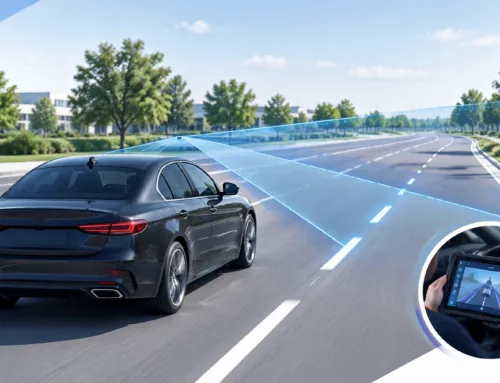
Take a moment to consider the precision required for modern safety systems. Advanced Driver Assistance Systems (ADAS) rely on cameras and radar sensors to "see" the road. When these sensors are even slightly out of position, the car’s brain receives incorrect data. Expert care is required to ensure these systems function correctly.
The Misconception of the "Software Bug"
When a car behaves unexpectedly, it is easy to blame the software. While software updates from manufacturers can occasionally address systemic issues, individual "ghost" events are often rooted in physical misalignment.
Software follows logic. If the software is programmed to stop the car when an object is 10 feet away, and the sensor incorrectly reports an object 10 feet away, the software is doing its job. The problem lies with the sensor providing the wrong information.
At Smart Vehicle Solutions, we specialize in identifying these hardware discrepancies through Diagnostic Scanning. Identifying the root cause is the first step toward restoring your vehicle's safety.
The Math of Misalignment: Why Millimeters Matter
Precision is the foundation of ADAS. Sensors are mounted with tight tolerances. A forward-facing radar sensor or camera that is off by just 0.6 degrees can cause significant operational errors.

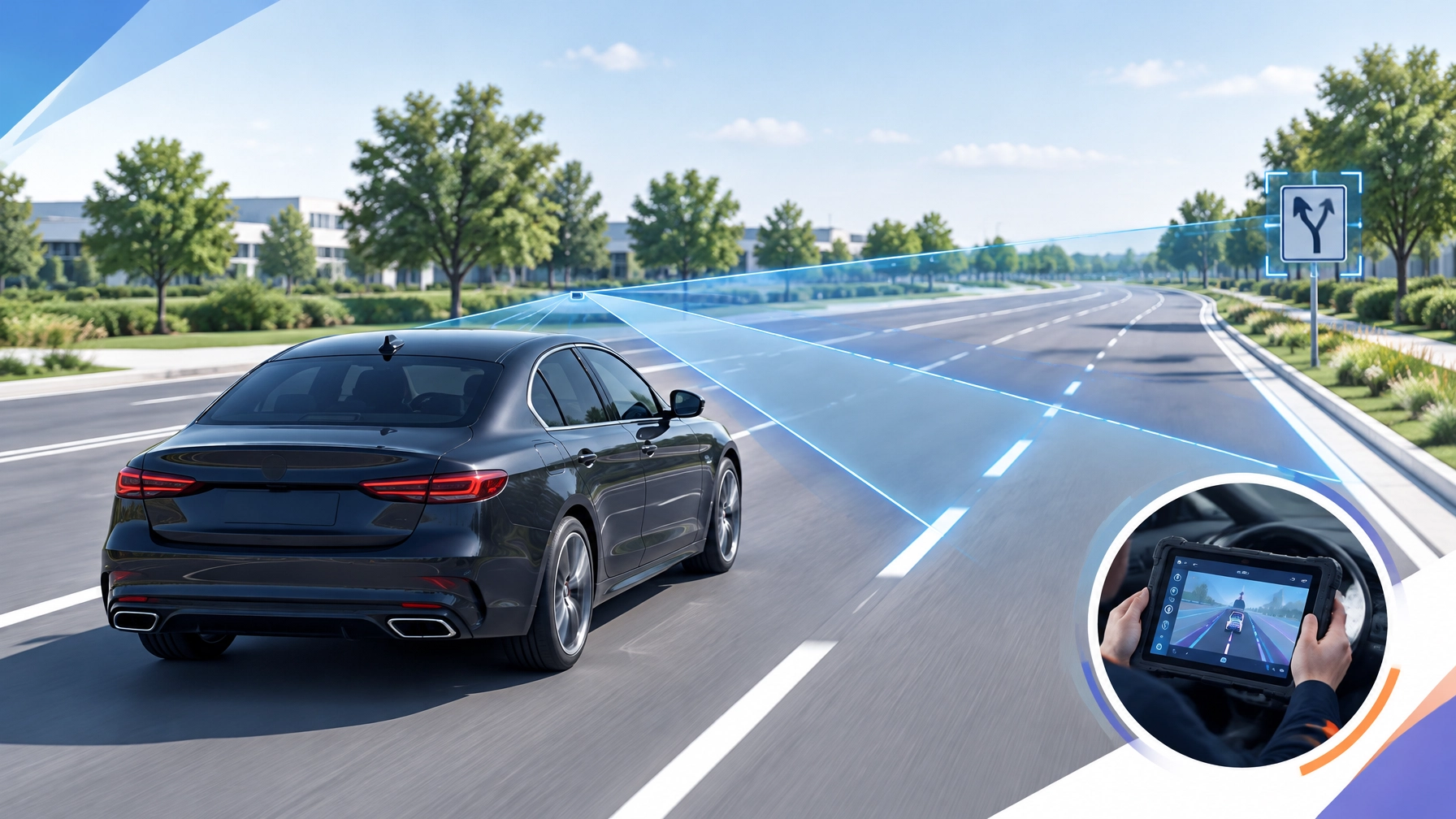
At highway speeds, a sensor that is angled slightly downward may perceive a shadow, a manhole cover, or a change in road texture as a solid obstacle. Similarly, a sensor angled too far to the left or right may "see" a vehicle in the adjacent lane and interpret it as a head-on collision threat.
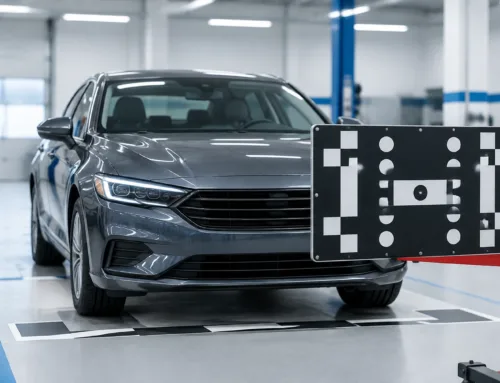
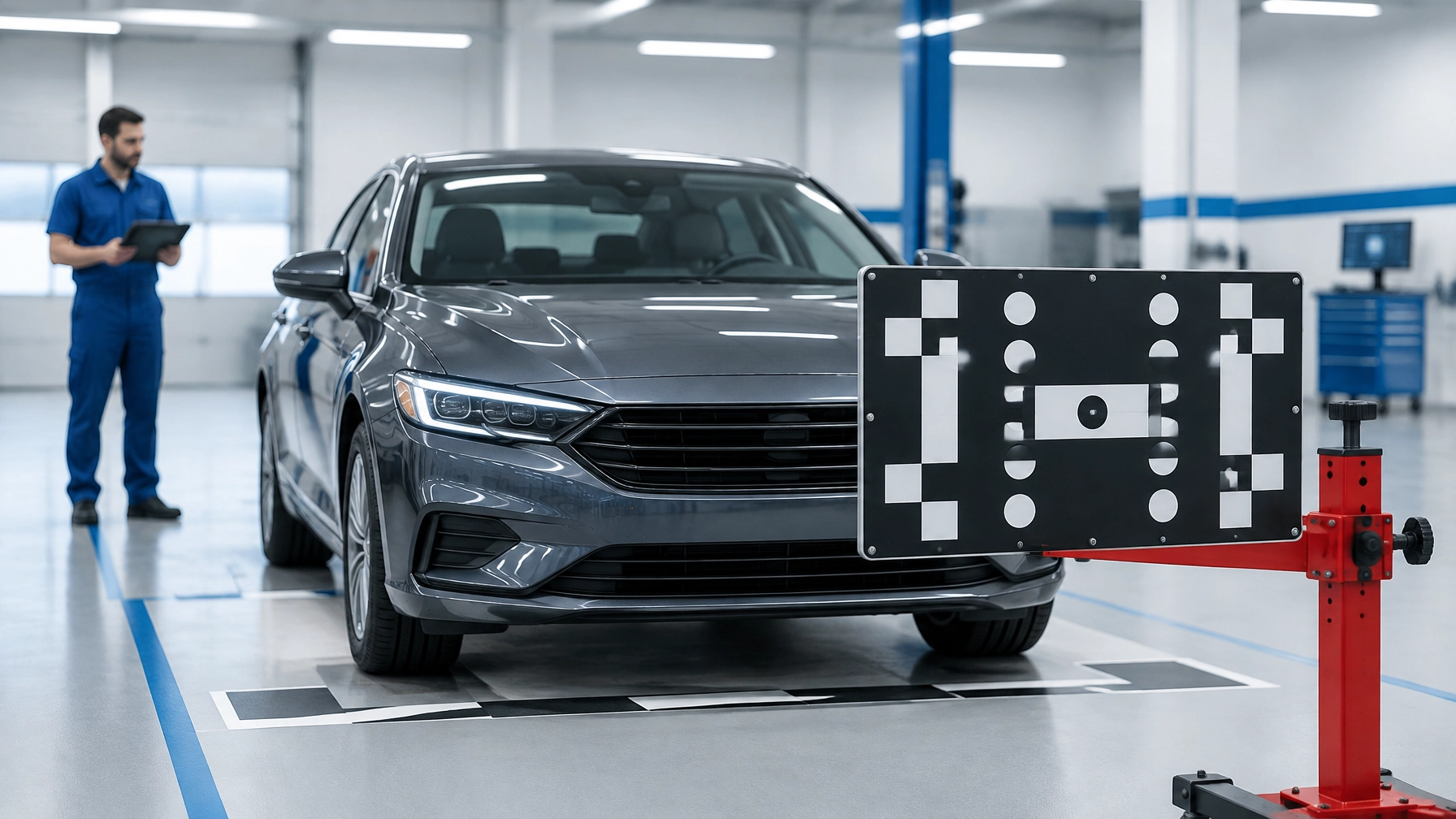
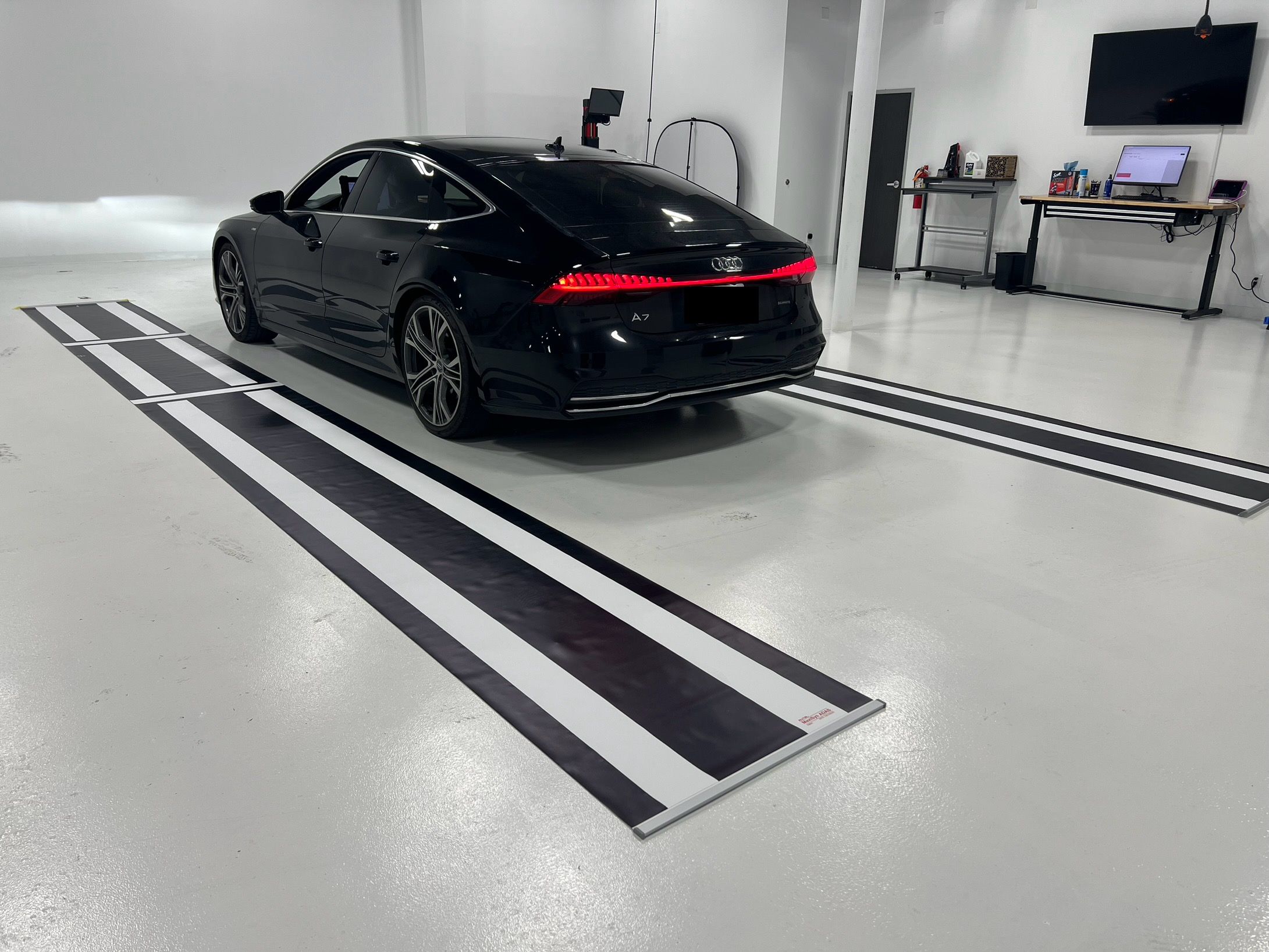
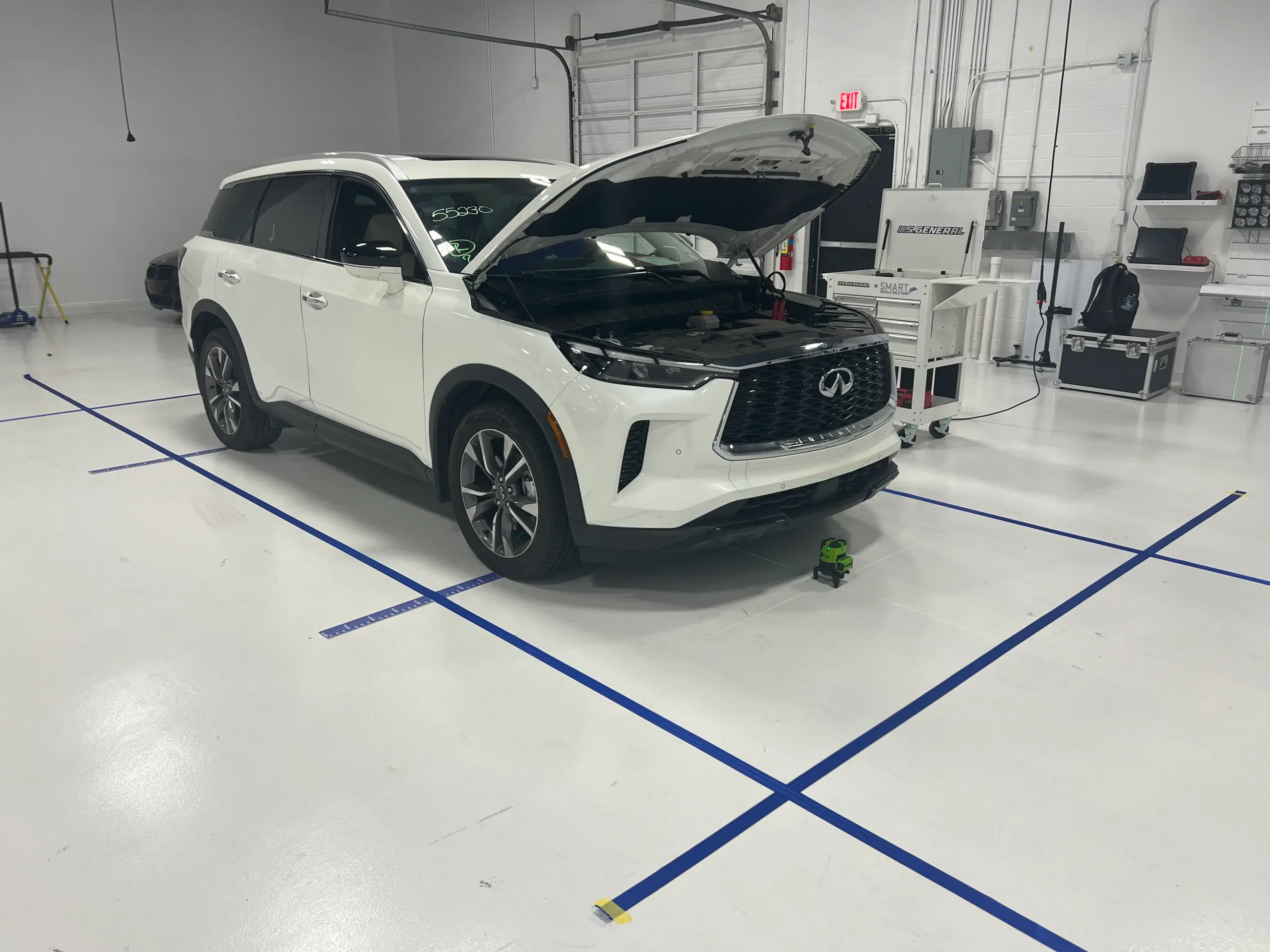
The vehicle does not know the sensor is tilted. It simply reacts to the data it receives. This is why professional Calibration Services are necessary to verify that every sensor is precisely aligned with the vehicle’s thrust angle.
Common Triggers for Sensor Misalignment
Oops! Did you recently have a minor repair or a wheel alignment? Even common maintenance tasks can disturb sensitive ADAS hardware. If your car is ghost braking, check if any of the following have occurred recently:
- Windshield Replacement: The forward-facing camera is often mounted directly to the glass. Even a micro-shift in the new glass position requires recalibration. You can read more about this in our guide on windshield camera calibration.
- Minor Collisions: A "fender bender" that doesn't leave a scratch on the paint can still jar a radar bracket behind the bumper.
- Wheel Alignment and Suspension Work: Changes to the vehicle's ride height or geometry alter the direction the sensors are pointing relative to the road. See our detailed breakdown on ADAS and wheel alignment.
- Pothole Impacts: Severe road shock can shift mounting brackets over time, leading to gradual misalignment.

The "No Fault Code" Trap
A common mistake made by many general repair shops is assuming that the absence of a Warning Light or Diagnostic Trouble Code (DTC) means the system is fine.
ADAS modules are designed to operate until they encounter a total failure. A sensor that is 2 degrees out of alignment may not trigger a fault code because it is still "sending data." The system believes the data is accurate.
We provide Post Calibration Scans and Documentation to prove that your system is not just "functional," but accurate.
How to Solve Ghost Braking Issues
If you are experiencing phantom braking, follow these direct steps to ensure your safety:
- Clean Your Sensors: Ensure the front emblem (radar location) and the top of the windshield (camera location) are free of dirt, ice, or debris.
- Verify Recent History: Identify if the braking started after a recent repair, new tires, or an alignment.
- Schedule a Professional Calibration: Call a specialist to perform a static or dynamic calibration.
- Request a Test Drive: Ensure the technician performs a Test Drive to verify real-world performance after adjustments.

Professional ADAS Services You Can Trust
Smart Vehicle Solutions provides expert care for all modern vehicle makes and models. Our technicians use the latest specialized calibration technology to ensure your safety systems perform exactly as the manufacturer intended.
Our Service Standards:
- Diagnostic Scanning: We identify hidden issues within your vehicle's electronic architecture.
- Precise Calibration: We align sensors and cameras to exact manufacturer specifications.
- Mobile Convenience: We bring our expertise to you or your preferred repair shop.
- Certified Documentation: Every service includes a detailed record of adjustments made.

Contact Smart Vehicle Solutions Today
Don't ignore unexpected braking. It is a sign that your safety systems are not calibrated correctly. Precise sensor alignment is the only way to ensure your vehicle protects you without false alarms.
Service Hours:
Monday – Friday: 8:00 AM – 6:00 PM
Saturday: By Appointment
Sunday: Closed
Contact Us:
Visit our Contact Page to schedule a service or request a mobile technician. Expert calibration is just a phone call away. Ensure your vehicle’s safety systems are working for you, not against you. Call us today.


Leave A Comment
You must be logged in to post a comment.