

Your vehicle may drive normally after a suspension repair. The steering may feel better. The tires may track straight. No warning light may appear.
That does not always mean the repair is complete.
If your vehicle has cameras, radar, or other Advanced Driver Assistance Systems (ADAS), suspension work can change the way those systems interpret the road. The repair may require ADAS calibration before your safety features can operate as the manufacturer intended.
Take a moment to confirm what happened after the repair.
Why Suspension Work Affects ADAS
Modern safety systems use more than software. They depend on precise vehicle geometry.
A forward-facing camera or radar sensor is aimed according to a reference plane established during vehicle design and manufacturing. That reference depends on factors such as:
- Vehicle ride height
- Wheel alignment
- Steering angle
- Thrust angle
- Sensor height
- Vehicle centerline
- Tire pressure and vehicle loading
Change the vehicle’s geometry, and you may change the sensor’s view.
A new strut can alter ride height. A control arm can change alignment angles. A tie rod can change the direction the front wheels point. A lift kit can change the vehicle’s pitch and sensor height.
The sensor may still be firmly mounted. It may not have a diagnostic trouble code. It may not display a warning.
It can still be aimed incorrectly.
Research on manufacturer-specific service information commonly identify suspension repairs, steering repairs, wheel alignments, and ride-height changes as potential recalibration triggers. Always confirm the exact procedure for your year, make, model, and equipment level.
Why Your Mechanical Shop May Not Mention Recalibration
Many mechanical repair shops do not mention ADAS recalibration after suspension work. This is usually not because the shop is careless or acting in bad faith.
The more common reason is simple: the shop may have no way to perform the service or they have never been educated to this new technology.
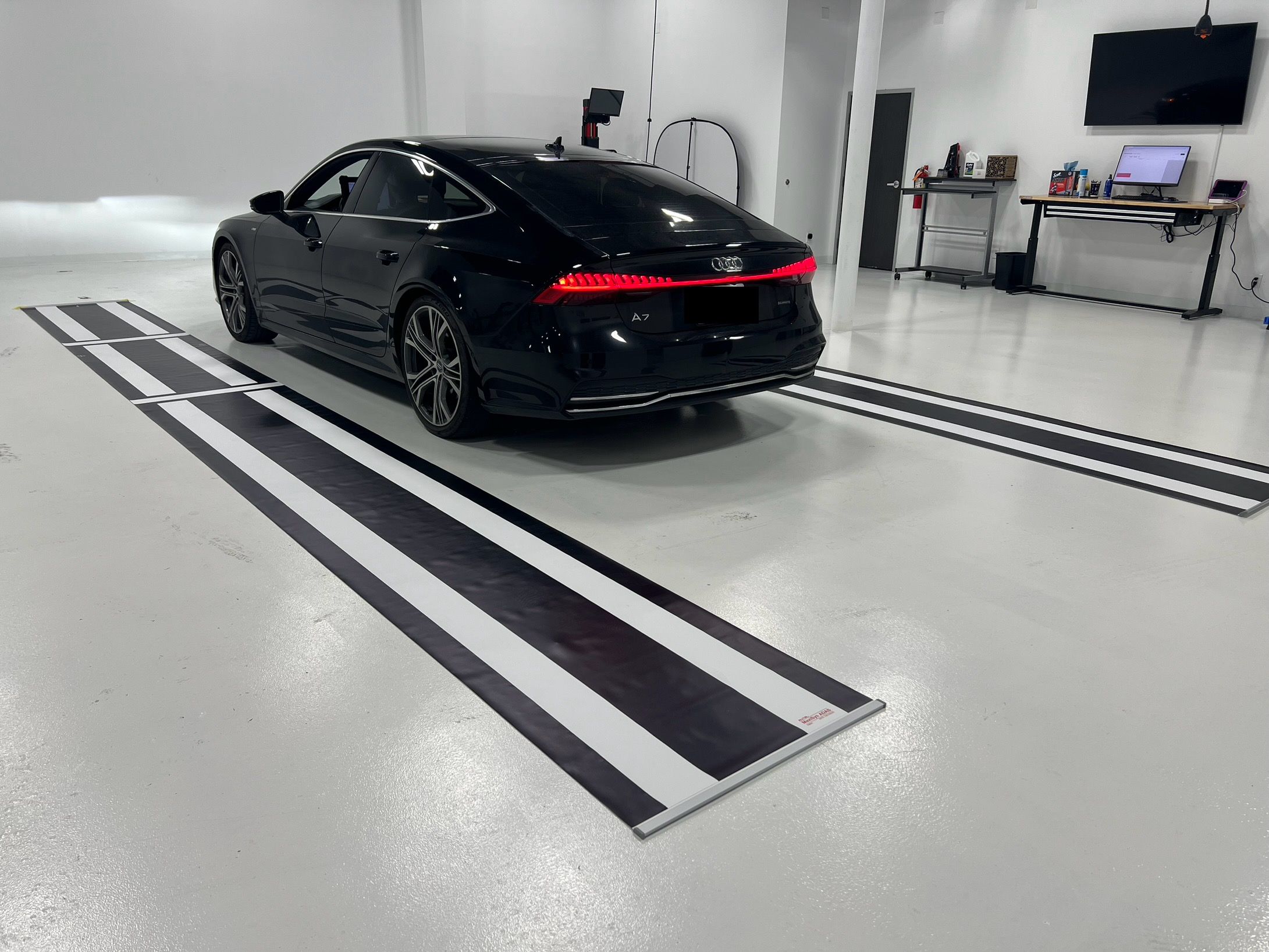
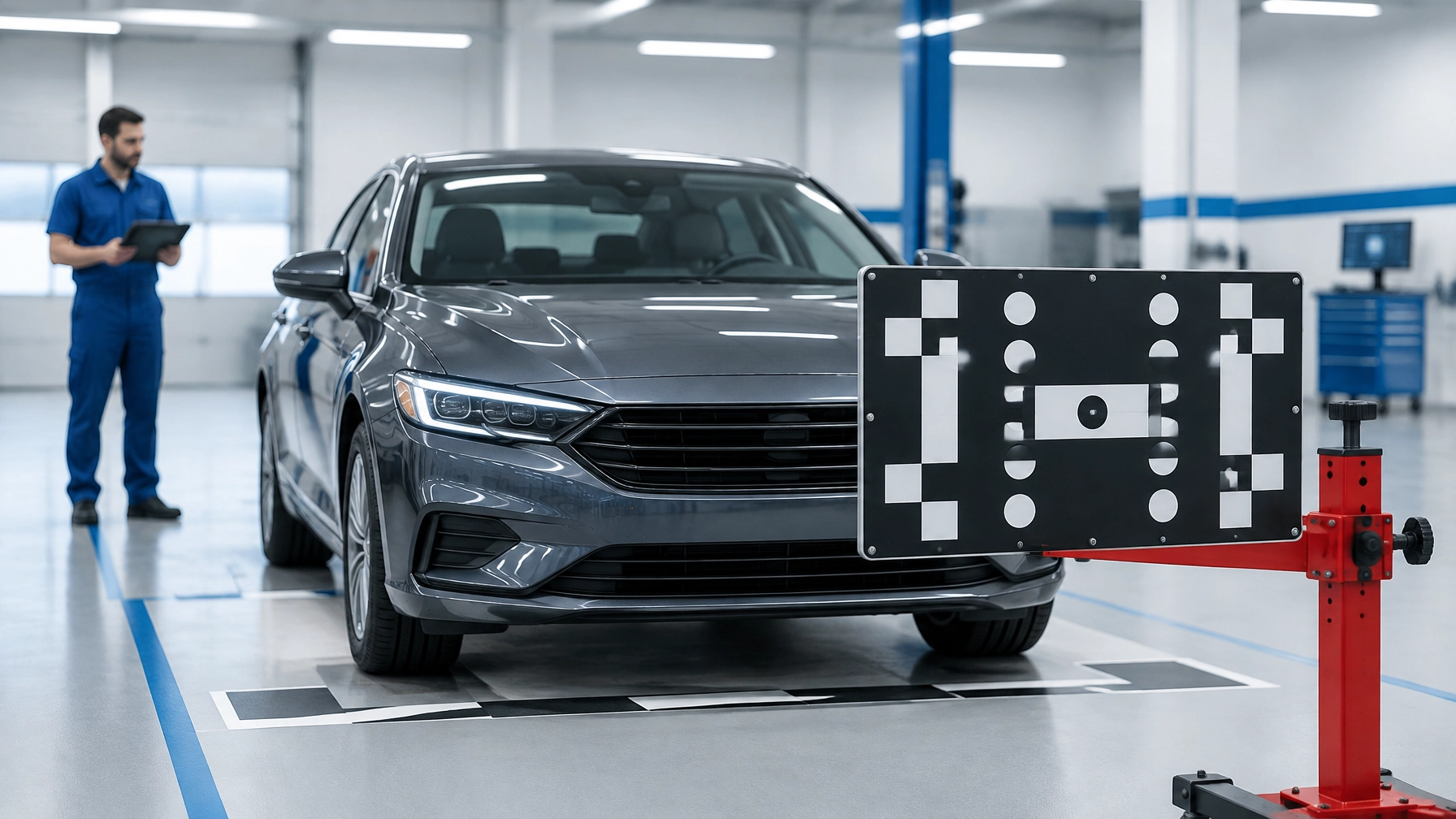
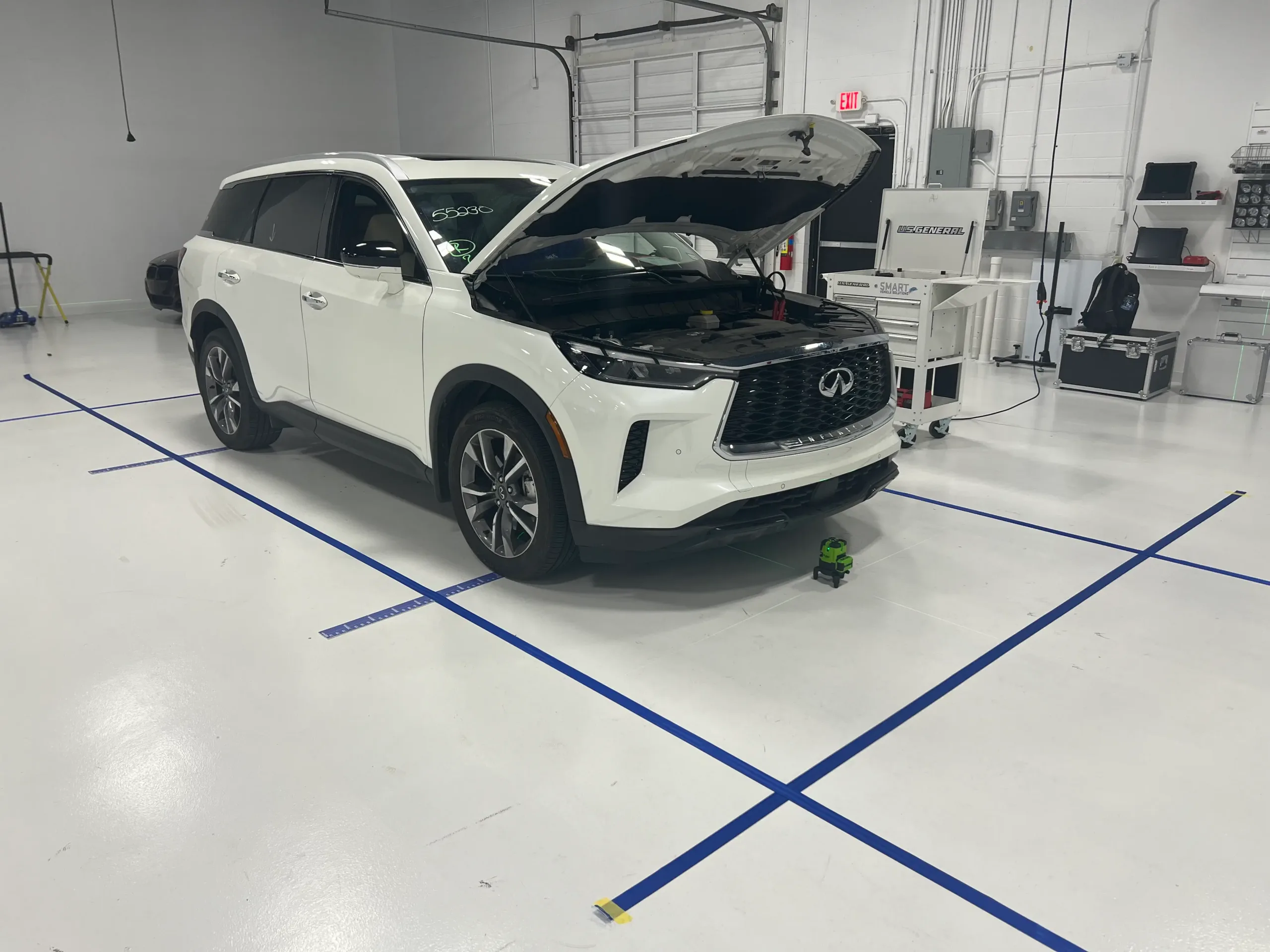
A proper calibration may require:
- OEM-level diagnostic scan tools
- Manufacturer-specific software
- Static calibration targets
- Radar reflectors
- Precision measuring equipment
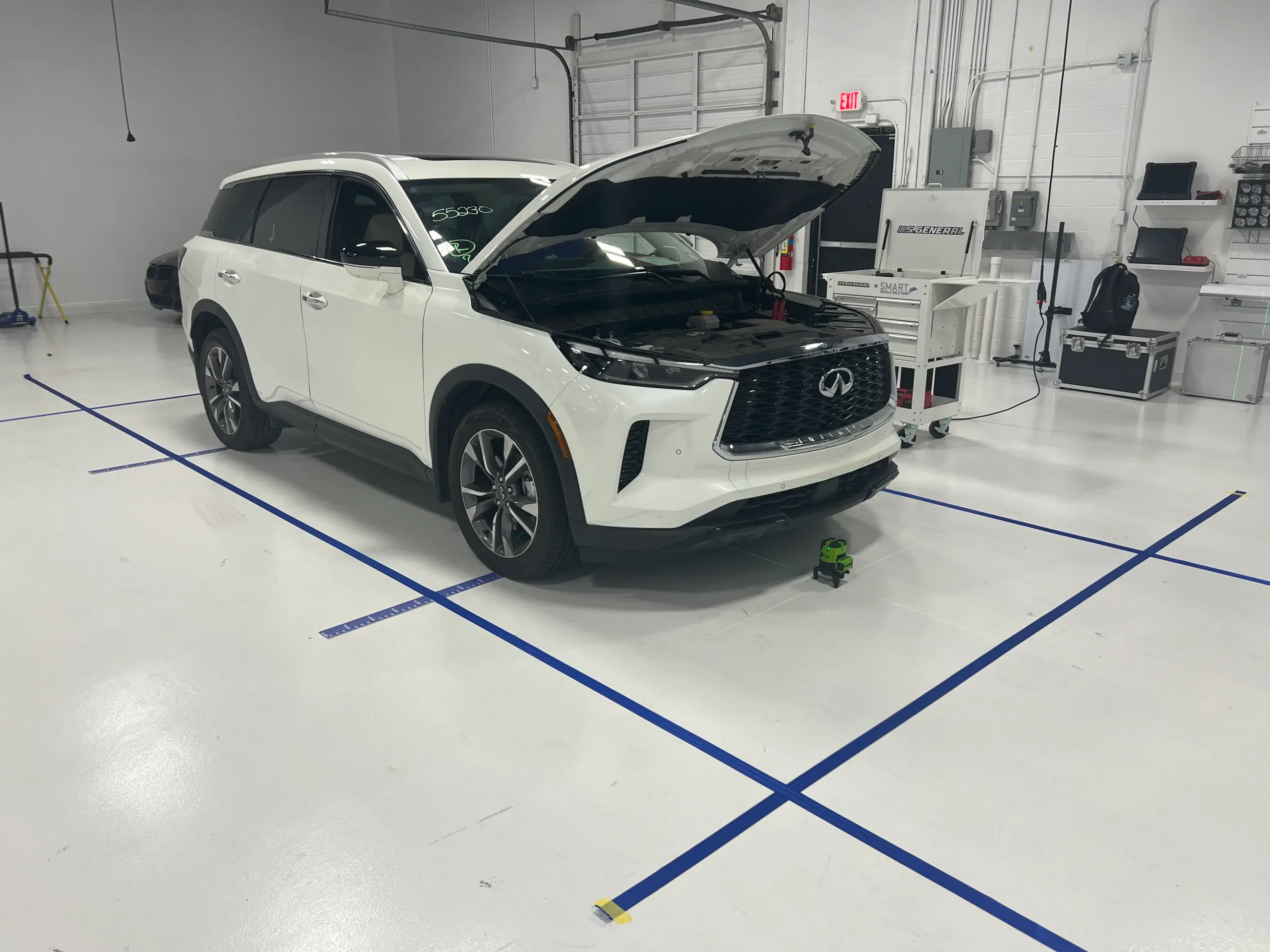
- A level and controlled calibration floor
- Defined lighting and workspace conditions
- Access to current OEM repair procedures
- Post-calibration scanning and road testing
A typical mechanical shop may be fully equipped to replace shocks, struts, springs, control arms, or tie rods. It may not have the equipment or space required for camera and radar calibration.
As a result, recalibration may never appear on the estimate.
The shop fixes the mechanical problem. The vehicle leaves. The customer assumes every safety system is ready.
Oops. That assumption can leave an important step unfinished.
Suspension Repairs That May Require ADAS Calibration
Ask about ADAS calibration services after any repair that changes vehicle geometry, steering input, ride height, or sensor positioning.
Common triggers include:
- Strut replacement
- Shock replacement
- Control arm replacement
- Tie rod replacement
- Ball joint replacement
- Spring replacement
- Steering rack replacement
- Steering-angle sensor service
- Subframe or crossmember work
- Suspension repairs after a pothole or collision
- Ride-height correction
- Lift kits
- Leveling kits
- Lowering kits
- Air suspension repairs
- Wheel alignment
- Changes to tire size or wheel size
Not every repair requires the same calibration. Some vehicles may require a steering-angle reset. Others may require a camera calibration, radar calibration, or both. Certain vehicles may require a static calibration, a dynamic calibration, or a combination.
Do not rely on a general rule or a dashboard light. Check the OEM procedure.

What Can Happen If Calibration Is Skipped?
Your vehicle may continue to drive normally. That is exactly what makes this issue easy to miss.
You may not notice a problem during a short trip to work or the grocery store. The vehicle can start, stop, steer, and accelerate as usual while its safety systems use an incorrect reference.
Possible symptoms include:
- False lane departure warnings
- Lane keep assist that steers unexpectedly
- Late or missed forward collision warnings
- Incorrect automatic emergency braking response
- Adaptive cruise control following at the wrong distance
- Blind spot monitoring that misreads another vehicle
- Traffic sign recognition errors
- A safety system that activates too early or too late
- Inconsistent warnings that appear only at certain speeds or road conditions
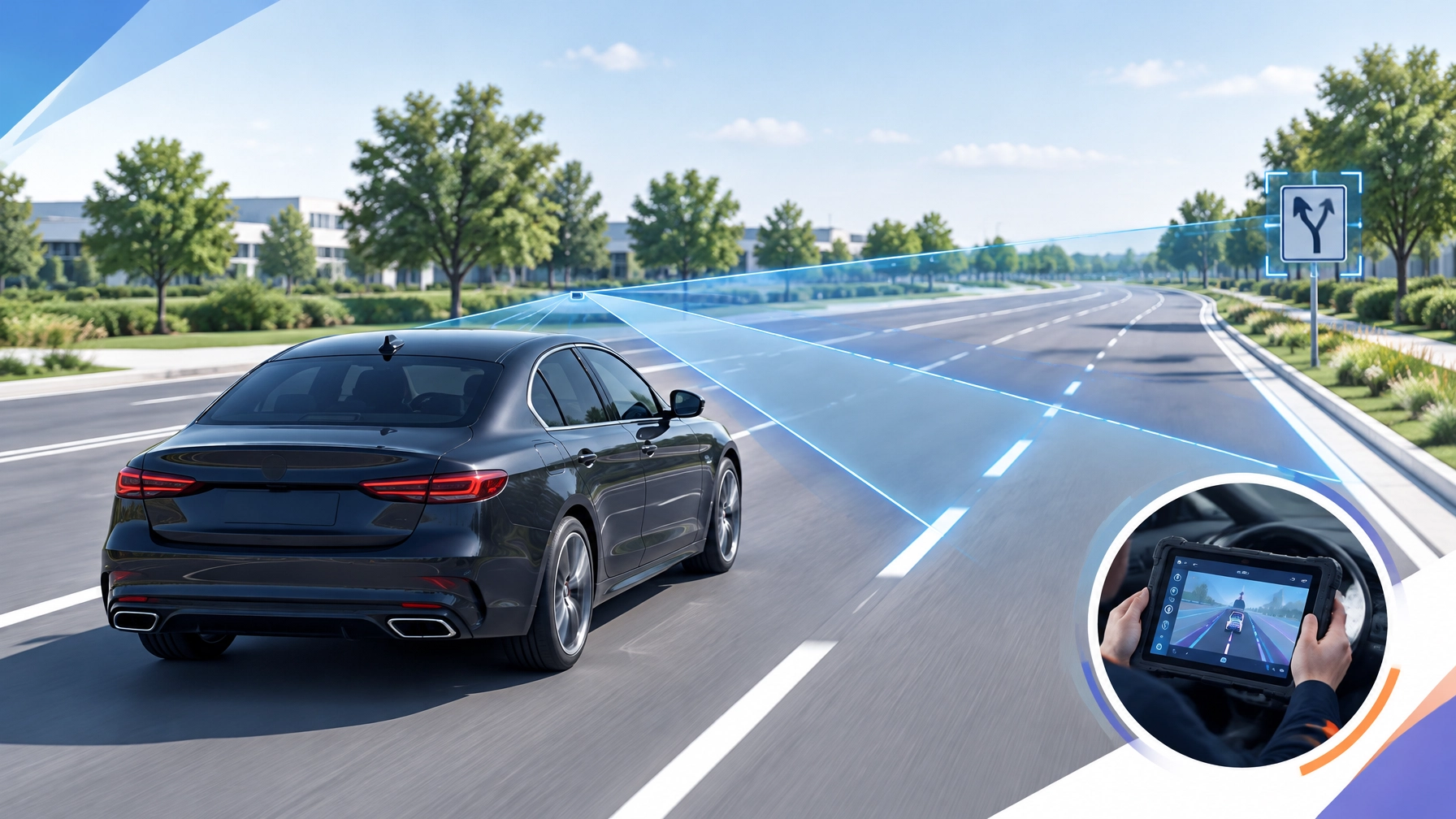
A forward camera that is aimed slightly off may misread lane markings. A radar sensor with an incorrect vertical or horizontal angle may calculate the distance or position of another vehicle incorrectly.
The system may also compensate within its available limits. That can make the vehicle appear to work normally until a situation requires precise information.
No warning light does not prove that calibration is unnecessary. Some calibration requirements are procedure-driven, not fault-driven. The manufacturer may require recalibration because the vehicle geometry changed, even when no diagnostic code is stored.
Recalibration Is Part of the Repair Procedure
ADAS calibration should not be treated as an optional add-on when the OEM repair procedure requires it.
The correct sequence generally looks like this:
- Complete the mechanical repair.
- Verify tire pressure and vehicle loading.
- Confirm ride height meets specifications.
- Perform a wheel alignment when required.
- Verify the thrust angle and steering position.
- Complete any required steering-angle sensor reset.
- Perform the required static or dynamic calibration.
- Run a post-calibration scan.
- Complete the required road test.
- Document the results.
Calibration should not be performed before the mechanical geometry is correct. If the wheels are not aligned or the ride height is not within specification, the sensor may be calibrated to the wrong reference.
The exact process varies by vehicle. Follow the manufacturer’s instructions for that vehicle.
At Smart Vehicle Solutions, our process includes diagnostic scanning, alignment verification, calibration, post-calibration scanning, road testing, and documentation.

The Insurance and Liability Issue
Documentation matters after a suspension repair.
If a future collision or insurance claim involves lane keeping, forward collision warning, adaptive cruise control, or automatic emergency braking, an incomplete repair record can create questions:
- Was the vehicle equipped with ADAS?
- Did the repair change ride height or alignment?
- Did the OEM procedure require recalibration?
- Was the calibration completed?
- Was the vehicle road-tested?
- Were the results documented?
An undocumented repair can complicate a future claim. If a covered repair required recalibration and that procedure was skipped, the repair process may receive additional scrutiny.
This does not mean every mechanical shop is responsible for performing calibration in-house. It does mean the shop should identify when the vehicle may require it, explain the limitation, and refer or sublet the work to a qualified ADAS provider.
Ask for the relevant OEM statement or procedure in writing. Keep the alignment report, calibration report, scan results, and repair order with your vehicle records.
Your safety systems deserve the same documentation as the mechanical repair.
What You Should Ask the Repair Shop
Before you leave, ask these direct questions:
- Did this repair change the vehicle’s ride height, steering geometry, or thrust angle?
- Does the OEM procedure call for ADAS recalibration after this repair?
- Does the vehicle require a steering-angle sensor reset?
- Was the wheel alignment completed to manufacturer specifications?
- Can your shop perform the required calibration?
- If not, who will complete it?
- Can I receive the OEM statement or procedure in writing?
- Will I receive a calibration report and post-scan results?
If the shop cannot perform the service, bring the vehicle to a qualified ADAS provider.
You do not need to diagnose the system yourself. You do not need to determine which target or scan tool is required. We handle the diagnostic and calibration process.

How Smart Vehicle Solutions Can Help
Smart Vehicle Solutions specializes in ADAS calibration for modern vehicles after mechanical repairs, alignments, collision repairs, and other work that may affect sensor accuracy.
We can:
- Identify the ADAS systems installed on your vehicle
- Scan for existing diagnostic trouble codes
- Verify alignment and geometry conditions
- Review the applicable OEM procedure
- Perform camera and radar calibration
- Complete required module programming
- Run a post-calibration scan
- Road-test the vehicle
- Provide detailed documentation
We also work with mechanical repair shops and collision centers. If your shop does not have OEM-level tools, targets, or a controlled calibration bay, hand the calibration work off to us.
We can serve as your ADAS calibration partner. Keep the mechanical repair with your team. Send the safety-system calibration to a specialist. Give the customer one complete repair path and the documentation to support it.
Do Not Wait for a Warning Light
A suspension repair can solve the physical problem while leaving the vehicle’s electronic safety reference unchecked.
Ask the question before you drive away:
“Does this repair require ADAS calibration?”
If the answer is unclear, call Smart Vehicle Solutions. We can review the repair, identify the required procedure, and complete the service without requiring you to diagnose the vehicle first.
Call us today for expert care and service for all makes and models.
Phone: 888-631-4896
Hours: Monday–Friday, 8:00 AM–5:00 PM
Weekends: Closed
Location: 13625 Neutron Road, Farmers Branch, TX 75244
Contact Smart Vehicle Solutions or review our ADAS calibration services.
For additional information, read our guide on ADAS calibration after a wheel alignment.




Leave A Comment
You must be logged in to post a comment.