

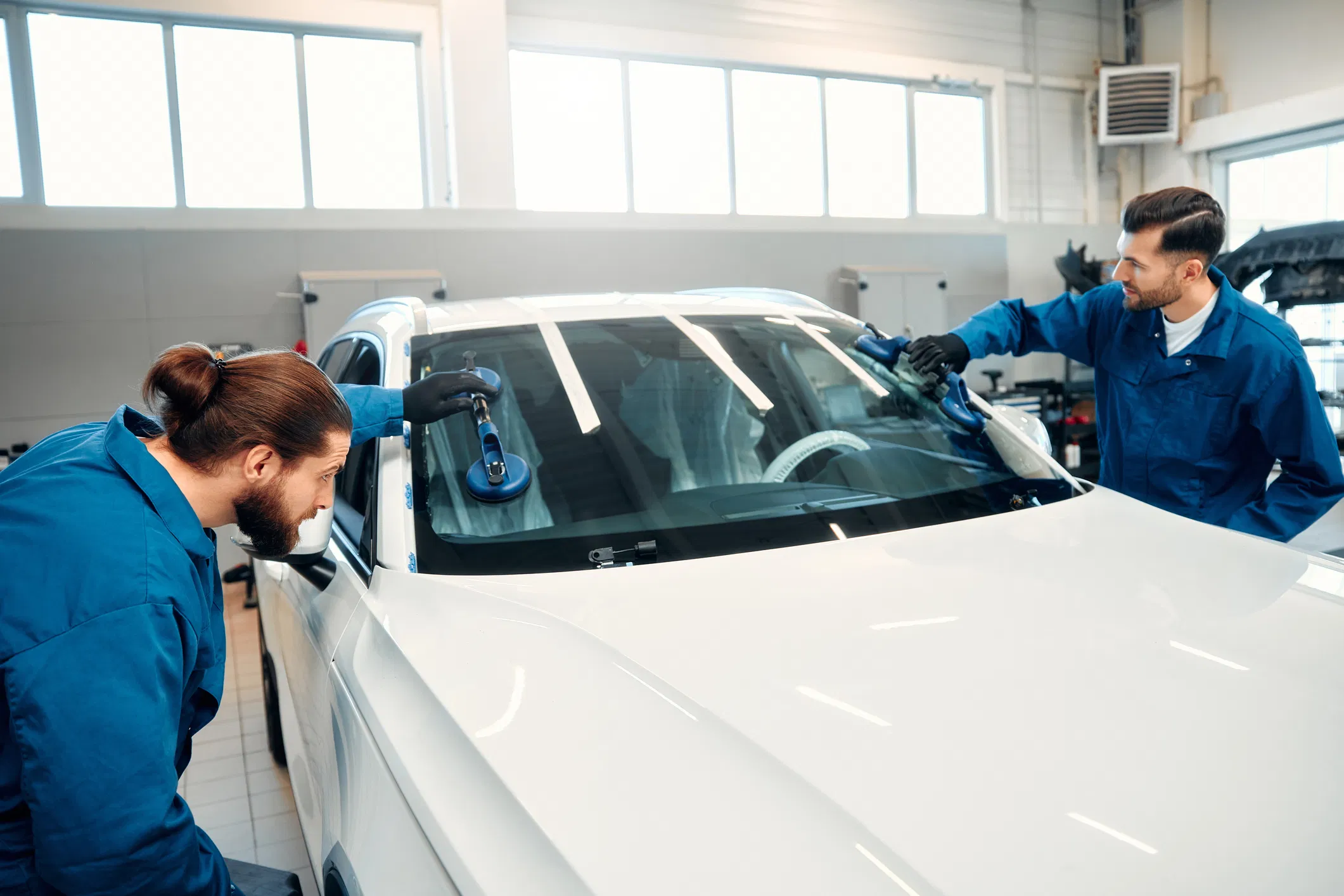
If your windshield needs replacement, ask one more question before approving the work:
Will my vehicle need windshield camera calibration afterward?
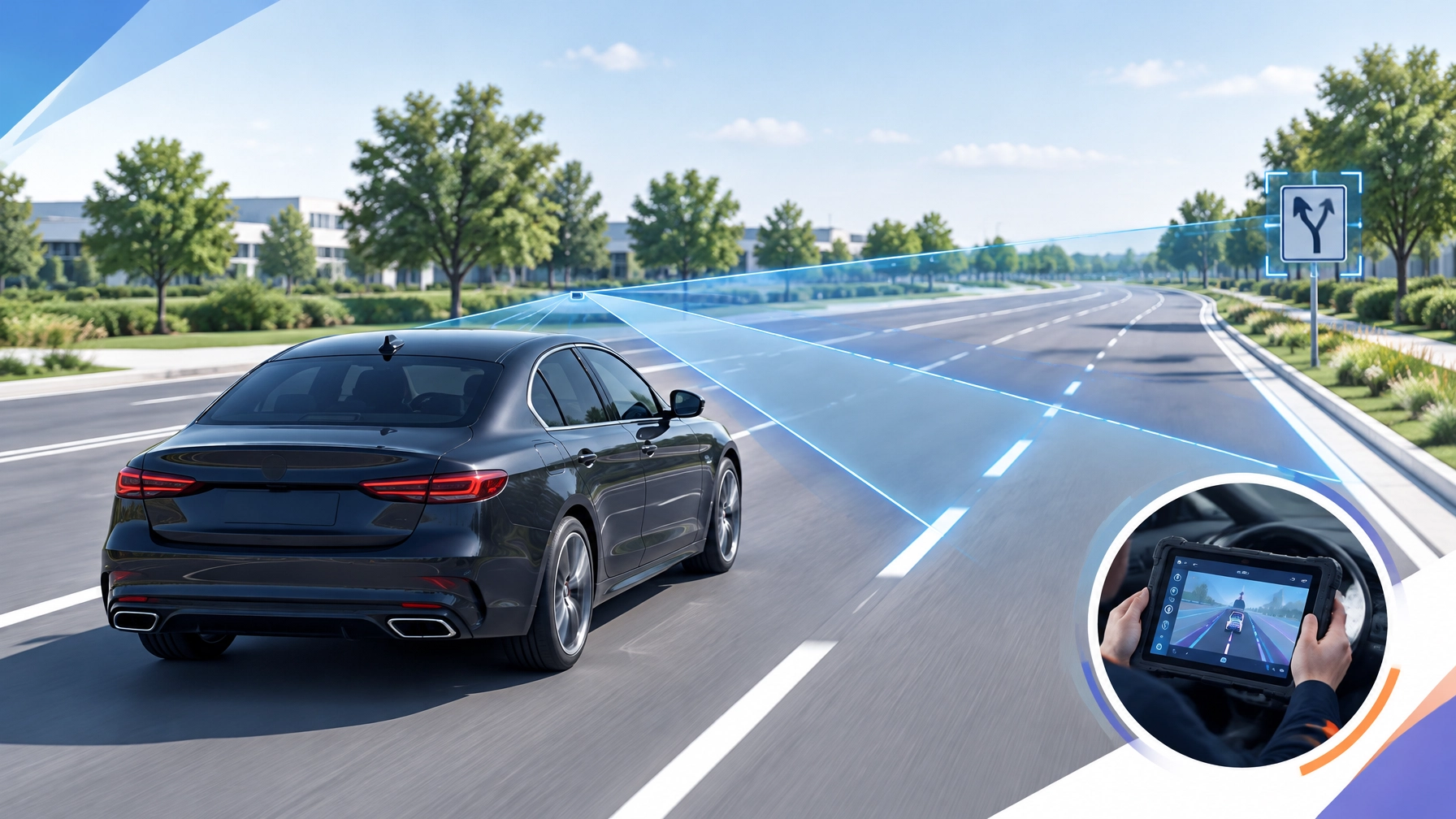
Many newer vehicles use a forward-facing camera mounted behind the rearview mirror. That camera supports systems such as:
- Automatic emergency braking
- Lane departure warning
- Lane keeping assist
- Adaptive cruise control
- Traffic sign recognition
- Pedestrian detection
A windshield replacement can affect the camera’s position and the way it views the road. Calibration may be required to restore the system to the vehicle manufacturer’s specifications.
New state laws are now requiring glass shops to disclose more information about ADAS and calibration. However, a disclosure law does not always mean that every shop must perform the calibration itself.
Take a moment to understand the difference.
What Is Windshield Camera Calibration?
Windshield camera calibration is the process of aligning and configuring a vehicle’s forward-facing camera after glass replacement or other work that may affect its position.
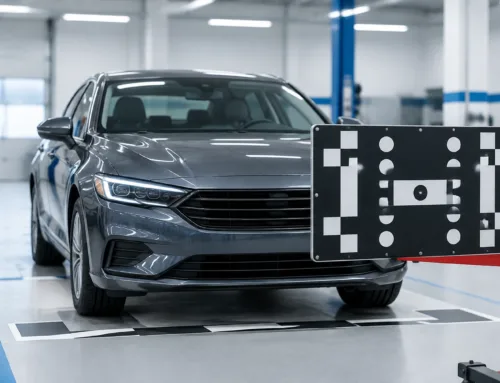
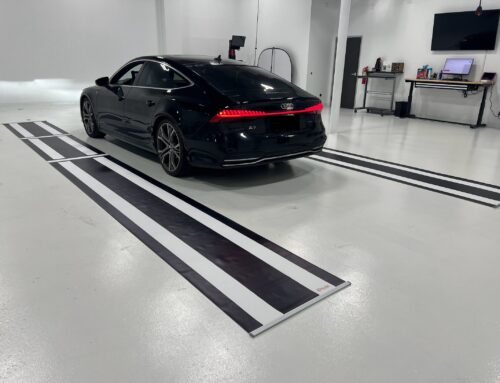
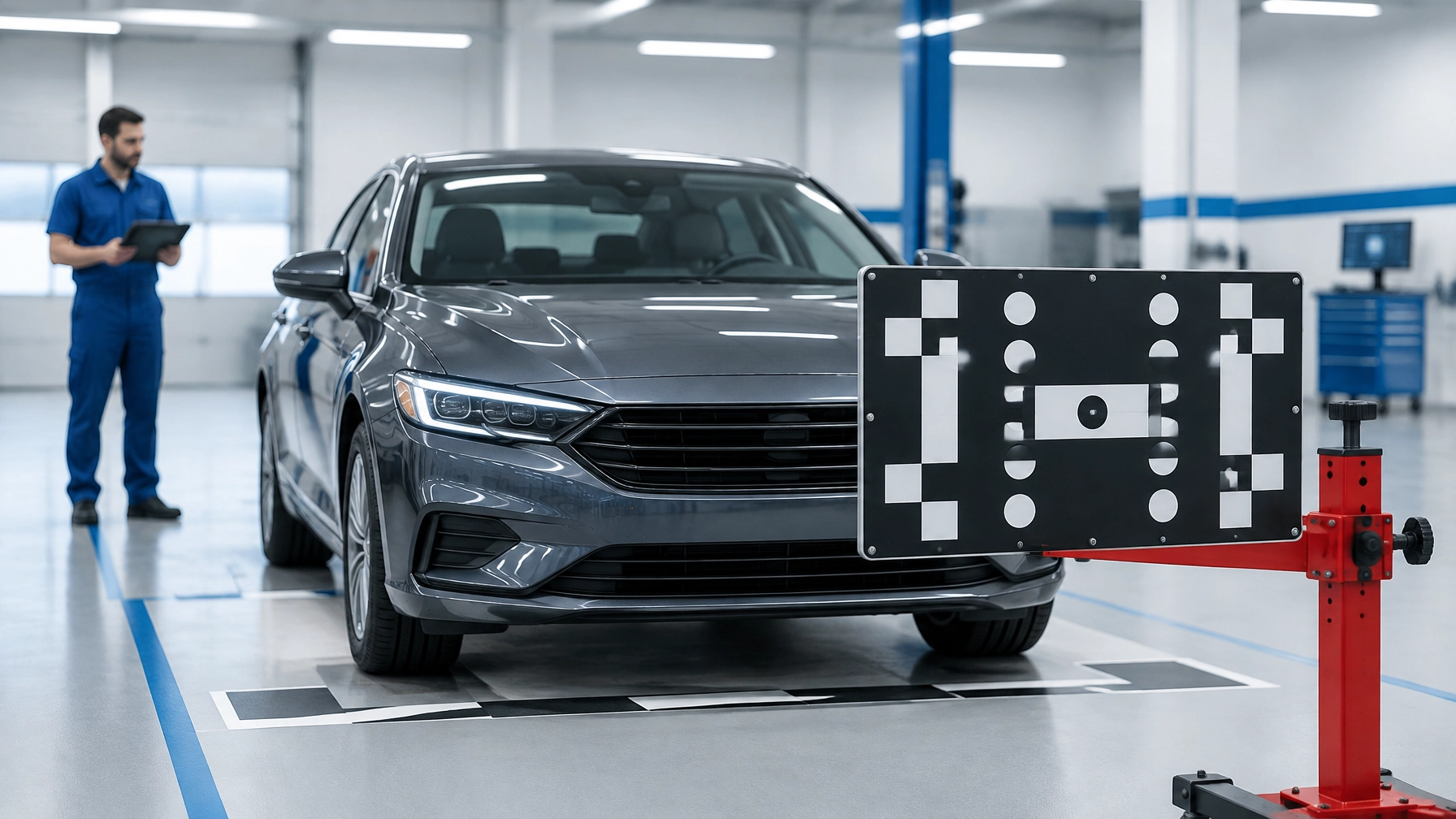
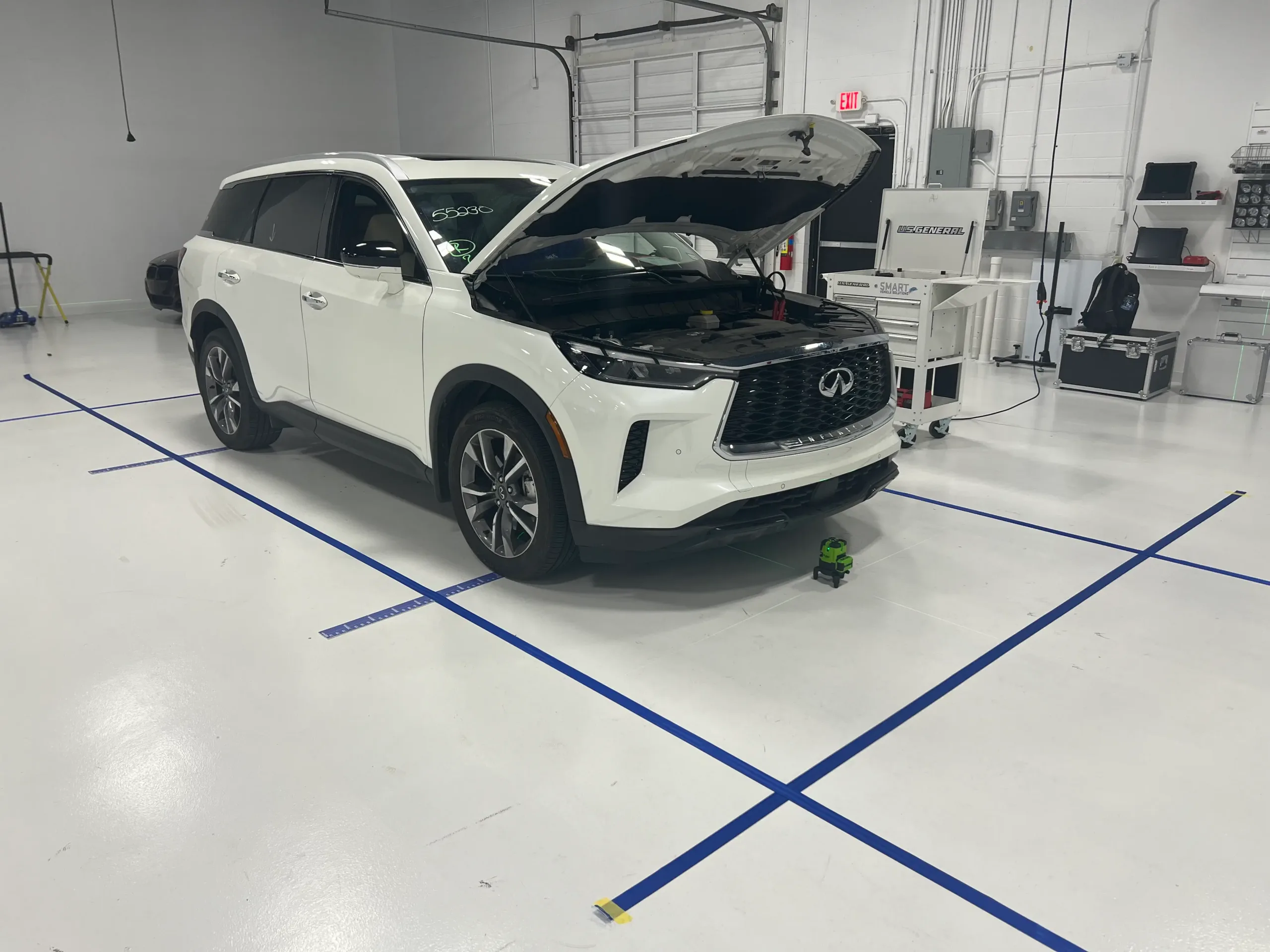
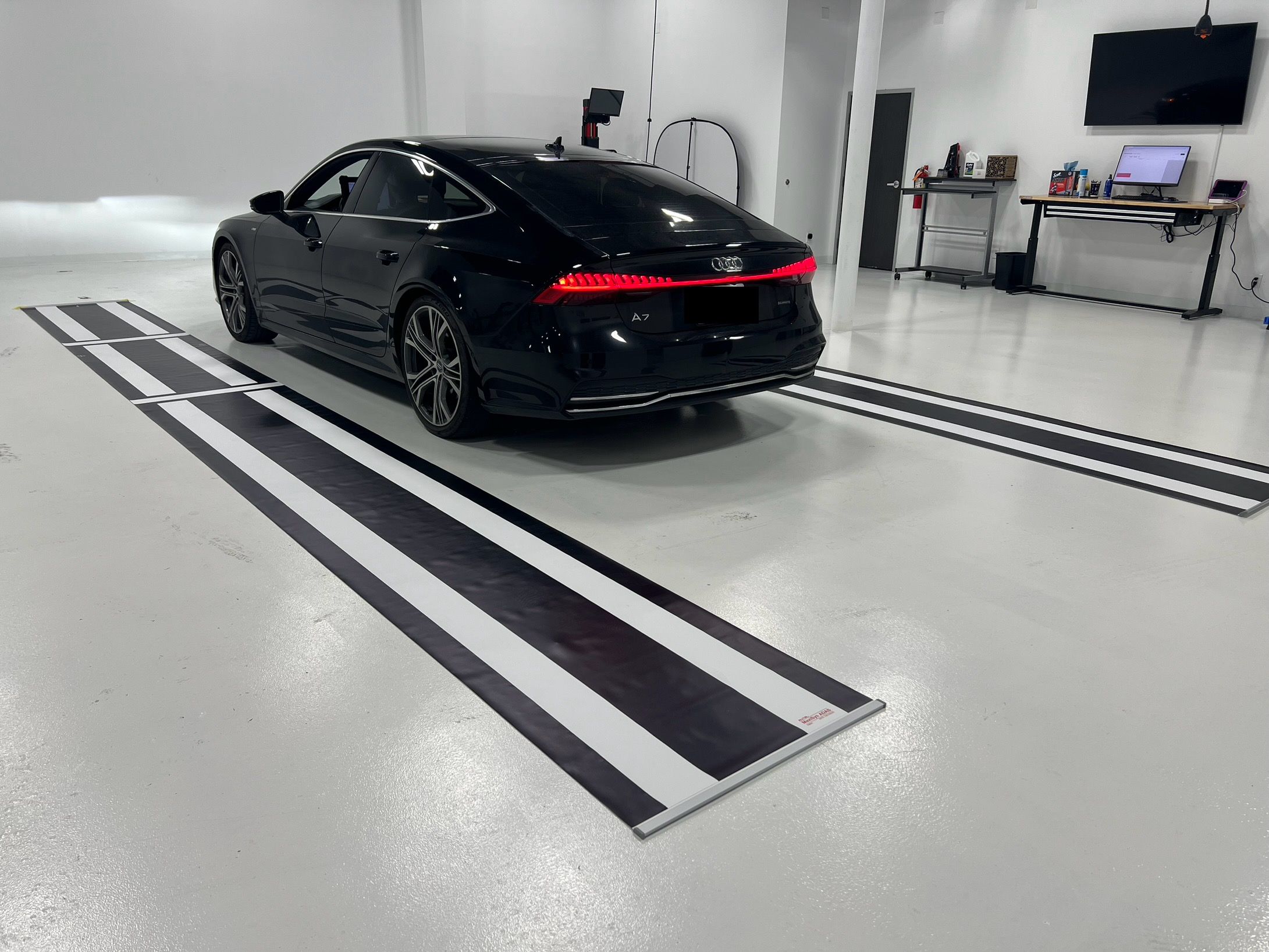
The technician uses vehicle-specific procedures, specialized targets, diagnostic equipment, and manufacturer information. Some vehicles require a static calibration in a controlled bay. Others require a dynamic calibration that includes a documented road test. Some require both.
The process may include:
- Scanning the vehicle for diagnostic trouble codes.
- Confirming the camera and related modules are communicating.
- Checking wheel alignment and vehicle geometry.
- Positioning the vehicle and calibration targets precisely.
- Programming or configuring modules when required.
- Completing the camera calibration.
- Performing a post-calibration scan.
- Completing a test drive when required.
- Documenting the result.

The correct procedure depends on the vehicle’s year, make, model, equipment, and manufacturer instructions. There is no universal shortcut based only on the vehicle’s age.
Why Can a Windshield Replacement Affect ADAS?
The camera does not view the road directly. It views the road through the windshield.
A replacement windshield may have differences in:
- Curvature
- Thickness
- Optical clarity
- Camera mounting position
- Bracket location
- Adhesive placement
- Alignment with the vehicle body
Even a small change can affect what the camera sees. The camera may not recognize lane markings, vehicles, pedestrians, or road signs at the correct distance or angle.
The camera may also be removed from the old windshield and attached to the new one. That installation changes the camera’s reference point. The vehicle must be checked to determine whether recalibration is required.
Important: Calibration is not automatically required for every vehicle after every glass repair. Follow the vehicle manufacturer’s procedure. Ask the shop to give you a vehicle-specific answer.
What Are the New Laws Actually Requiring?
The laws developing across the country generally focus on consumer disclosure, calibration capability, written documentation, and honest insurance practices.
They do not always require every glass shop to own calibration equipment. Instead, they require the shop to tell you:
- Whether your vehicle has ADAS.
- Whether the manufacturer recommends calibration after the glass work.
- Whether the shop will perform calibration.
- Whether the shop can meet manufacturer specifications.
- Where to take the vehicle if the shop cannot perform the work.
- Whether the calibration was successful.
This is an important distinction.
A shop may legally perform the windshield replacement and refer you to a qualified ADAS calibration provider. It should not release the vehicle while implying that the safety systems are ready if calibration was required but not completed.
Which States Are Leading the Change?
New York
New York has enacted specific requirements addressing motor vehicle glass repair, ADAS calibration, and consumer disclosure.
The framework requires glass facilities to explain whether recalibration is needed and whether the facility can perform it according to manufacturer specifications. If the facility cannot meet those specifications, the customer must be directed to a qualified dealership or specialist.
The work and charges must also be clearly described. If calibration is attempted and unsuccessful, the customer and insurer must be notified.
Review the New York legislative information for current state details.
Florida
Florida’s motor vehicle glass reforms treat ADAS calibration and recalibration as part of motor vehicle repair in relevant situations.
Florida law requires written or electronic notice regarding whether calibration is needed to make the ADAS operable and to ensure the service meets or exceeds manufacturer specifications. The state also addresses insurance steering, assignment of post-loss benefits, and glass-related billing practices.
See Florida Statute § 627.7291 and review your insurance coverage before authorizing work.
Kentucky
Kentucky’s KRS 367.361 requires disclosures for insured motor vehicle glass work.
Before the contract is finalized, the shop must disclose whether the vehicle has ADAS, whether calibration is required, and whether the shop can perform calibration to manufacturer specifications.
If calibration is performed, the customer must receive written information about whether it was successful and whether the vehicle should be taken to a qualified facility if the calibration did not succeed.
Virginia
Virginia’s Motor Vehicle Glass Act provisions took effect July 1, 2026.
Under Virginia Code § 59.1-207.6:3, a glass shop must provide written notice before service. The notice must state whether the vehicle has ADAS, whether the manufacturer recommends calibration, whether the shop intends to calibrate to manufacturer specifications, and where the vehicle should go if the shop cannot or will not perform the work.
If calibration is performed, the shop must provide written notice of the result.
Illinois and Louisiana
Illinois and Louisiana are among the states moving forward with similar requirements.
Illinois House Bill 4373, the Motor Vehicle Glass Repair Act, has advanced through the Illinois House and addresses ADAS identification, calibration disclosure, qualified referrals, and written results. Check the latest status through industry coverage of the Illinois bill.
Louisiana House Bill 929 proposes similar requirements. The official bill text would require written notice about ADAS, calibration needs, the shop’s calibration capability, and the result of any calibration. Review the official Louisiana bill document.
These proposals may change before becoming law. Ask your glass provider how the current requirements apply in your state.
What About the Federal ADAS Functionality and Integrity Act?
The federal ADAS Functionality and Integrity Act, H.R. 6688, is a House proposal. It is not a current federal windshield calibration mandate.
The proposal would direct the National Highway Traffic Safety Administration to develop guidance addressing:
- ADAS calibration after repairs or component replacement
- Camera and sensor tolerances
- Vehicle geometry and modification limits
- Test procedures
- Performance validation
- Documentation of system functionality
If enacted, the federal framework could make calibration requirements more consistent nationwide. Until then, vehicle manufacturers’ procedures and applicable state laws remain the primary reference points.
What Should You Ask Before Replacing Your Windshield?
Use this checklist before signing a work order.
1. Does my vehicle have ADAS?
Ask for a vehicle-specific answer. The technician should use the vehicle equipment, owner’s manual, VIN-specific information, or manufacturer procedures.
2. Does the manufacturer require calibration after this glass service?
Do not accept a general answer such as “all vehicles need it” or “no vehicles need it.” The answer depends on your specific vehicle and the work being performed.
3. Who will perform the calibration?
Ask whether the glass shop performs the work, uses a qualified calibration partner, or refers vehicles elsewhere.
4. Will the work meet manufacturer specifications?
Ask how the provider verifies the calibration. Look for a qualified technician, appropriate equipment, documented procedures, and a final report.
5. What happens if calibration fails?
The shop should provide a clear next step. Do not rely on lane-keeping, automatic braking, or other ADAS functions until calibration is completed successfully.
6. Will I receive documentation?
Request the diagnostic results, calibration report, post-calibration scan, test-drive result when applicable, and any manufacturer statements used during the service.

What Happens If You Skip Calibration?
An uncalibrated camera may:
- Fail to detect a lane departure.
- Issue warnings when you are driving correctly.
- Misread the position of another vehicle.
- Delay or prevent automatic emergency braking.
- Disable a safety feature and display a warning message.
- Operate outside the manufacturer’s intended parameters.
The vehicle may still start and drive normally. That does not mean the safety systems are working correctly.
Skipping calibration can also create problems with insurance claims, repair records, resale disclosures, and future service. If a warning light is ignored or a required procedure is not documented, it may be difficult to prove that the ADAS was restored properly.
Oops: replacing the glass is not always the final step.
How Smart Vehicle Solutions Helps
Smart Vehicle Solutions provides expert ADAS care for vehicle owners, repair shops, and collision centers.
Our process can include:
- Diagnostic scanning
- Code clearing
- Wheel alignment verification
- Windshield camera calibration
- Module programming
- Post-calibration scanning
- Documented test drives
- Electronic calibration reports
We use specialized equipment and vehicle-specific procedures. We also provide detailed documentation for your records, insurer, repair facility, or future vehicle owner.

Need service after a windshield replacement? Review our ADAS calibration services, learn more about our company, or contact Smart Vehicle Solutions.
Call us today at 888-631-4896.
Hours: Monday–Friday, 8:00 AM–5:00 PM
Weekends: Closed
Location: 13625 Neutron Road, Farmers Branch, TX 75244
Mobile service options may be available for qualified locations. Ask us to confirm coverage and scheduling.
Final Takeaway
New ADAS disclosure laws are giving drivers more information before windshield work begins. That is a positive change.
Remember the key point:
A law may require the shop to disclose calibration. The vehicle manufacturer’s procedure determines whether calibration is required.
Ask questions before the glass is replaced. Confirm who will perform the work. Keep the written result. If calibration is needed, complete it before relying on your vehicle’s safety features.
For reliable windshield camera calibration and documented ADAS service, call Smart Vehicle Solutions at 888-631-4896.




Leave A Comment
You must be logged in to post a comment.